

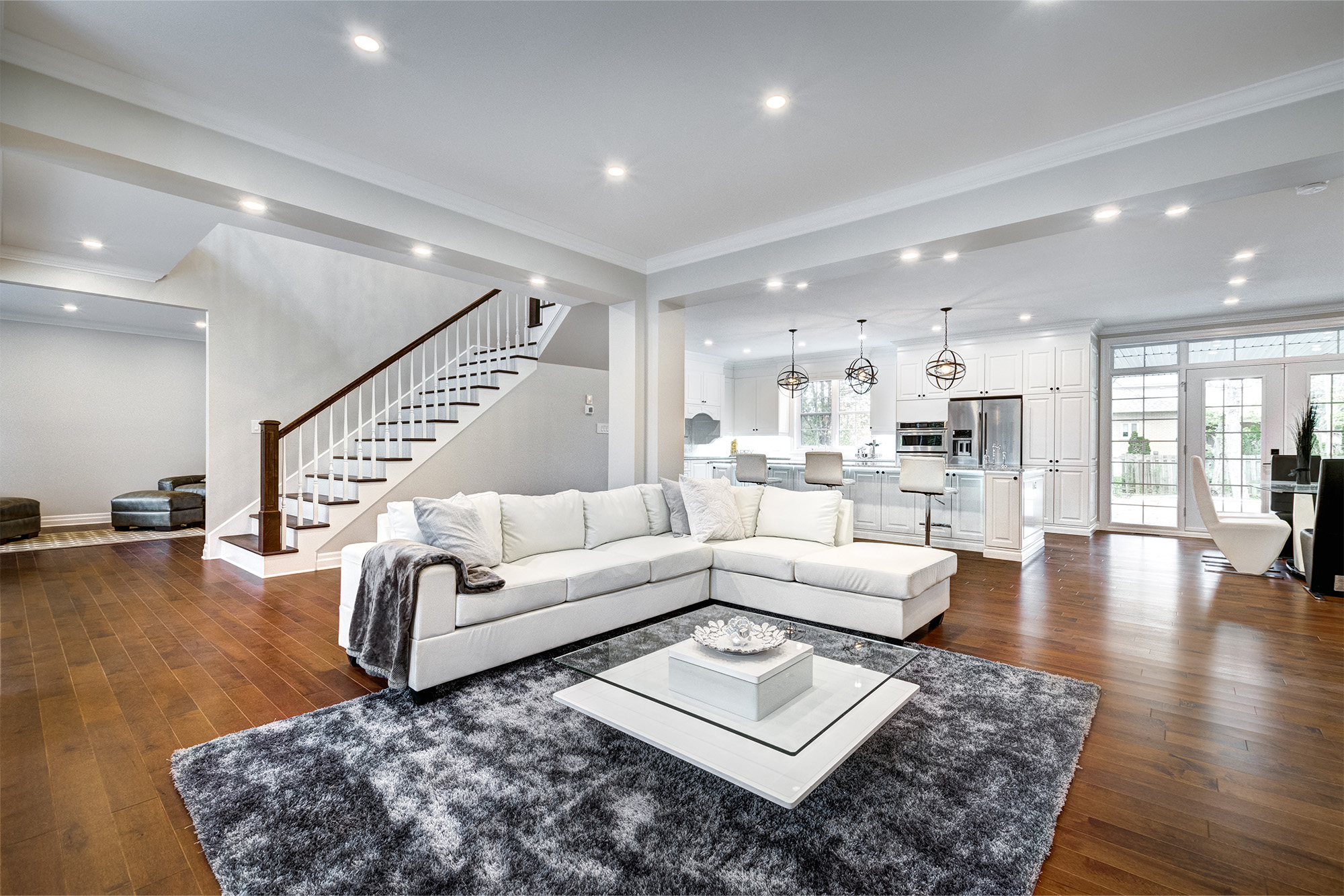
You walk downstairs on a January morning and the basement feels chilly and a little damp, even with the dehumidifier running. Upstairs, the sun is blasting through the front windows all afternoon. Both spaces would look incredible with real wood underfoot—but they don’t behave the same way. That’s exactly where the engineered vs. solid hardwood conversation really matters.
This guide breaks down how each type of wood flooring reacts to our four-season Mid‑Atlantic climate, and which one usually makes more sense below grade, on the main level, and on the second floor.
Engineered vs. Solid: What’s Actually Different?
Both options use real wood, but they’re built very differently.
Solid planks are one piece of lumber from top to bottom. Because each board is a single block, it can be sanded and refinished multiple times over the decades. The trade‑off is movement: wood expands and contracts across its width as humidity swings, which is why solid floors need tighter moisture control and careful acclimation.
Engineered boards have a real hardwood wear layer on top, supported by multiple layers of plywood or hardwood laid in a criss‑cross pattern. That layered core gives engineered flooring much better dimensional stability, so it doesn’t react as dramatically to moisture and temperature changes. If you want to see how different constructions, species, and finishes look side by side, the online hardwood flooring collection is a helpful place to compare options.
Basements: Why Stability Matters More Than Thickness
Most basements in this area are below grade and at least partially surrounded by concrete. Even with good drainage and a sump pump, the space tends to run more humid than the rest of the house. That constant moisture pressure is exactly what makes solid wood risky downstairs.
Solid planks installed over concrete or over a damp subfloor are more likely to cup, crown, or gap as seasons change. You can add moisture barriers and sleepers, but you’re still fighting the nature of the material. Engineered wood is built for this kind of environment. The cross‑laminated core helps the floor stay flatter, and many products are specifically approved for glue‑down or floating installations over concrete.
If a basement has a history of water intrusion, even engineered wood may not be the safest bet. In those situations, many homeowners look at luxury vinyl plank for the lower level and reserve real hardwood for upstairs. You can get a sense of how different textures and plank sizes look in finished spaces by browsing the completed project gallery.
Upper Levels: When Solid Hardwood Still Shines
Once you move to the main and second floors, moisture is easier to control. That’s where solid wood can really show its long‑term value. With a thicker wear surface, traditional planks can typically be refinished several times. If you plan to stay in your home for decades, that ability to refresh the surface after life’s dings and scratches is a major advantage.
Engineered wood still performs beautifully upstairs, especially wide‑plank styles that might move too much in a solid format. Many high‑quality engineered products have a wear layer thick enough for at least one or two sandings, which extends their lifespan significantly. For homeowners weighing these trade‑offs, it helps to look at species, construction, and finish side by side in the hardwood flooring catalog, then talk through how each one will behave in your specific rooms.
Subfloor condition matters on every level too. Older homes sometimes have uneven or damaged substrates that need attention before any wood goes down. Addressing issues like humps, dips, or soft spots with proper subfloor repair and prep services is what keeps a beautiful floor from squeaking, flexing, or failing prematurely.
Putting It Together for Your Home
The simplest way to think about it is this: engineered for moisture and movement, solid for maximum refinishing potential. In practice, that often means engineered downstairs and either format upstairs, depending on your plans for the home, your budget, and how hard your family is on floors. Many homeowners around South Jersey end up mixing materials—wood on the main level, a different surface in the basement—and tying everything together with consistent color and trim.
If you’d like help mapping out what makes sense in each level of your house, you can share your rooms, subfloor type, and any past moisture issues when you request a free in‑home flooring estimate, and the Rodrigues brothers’ team will walk you through the options step by step.