

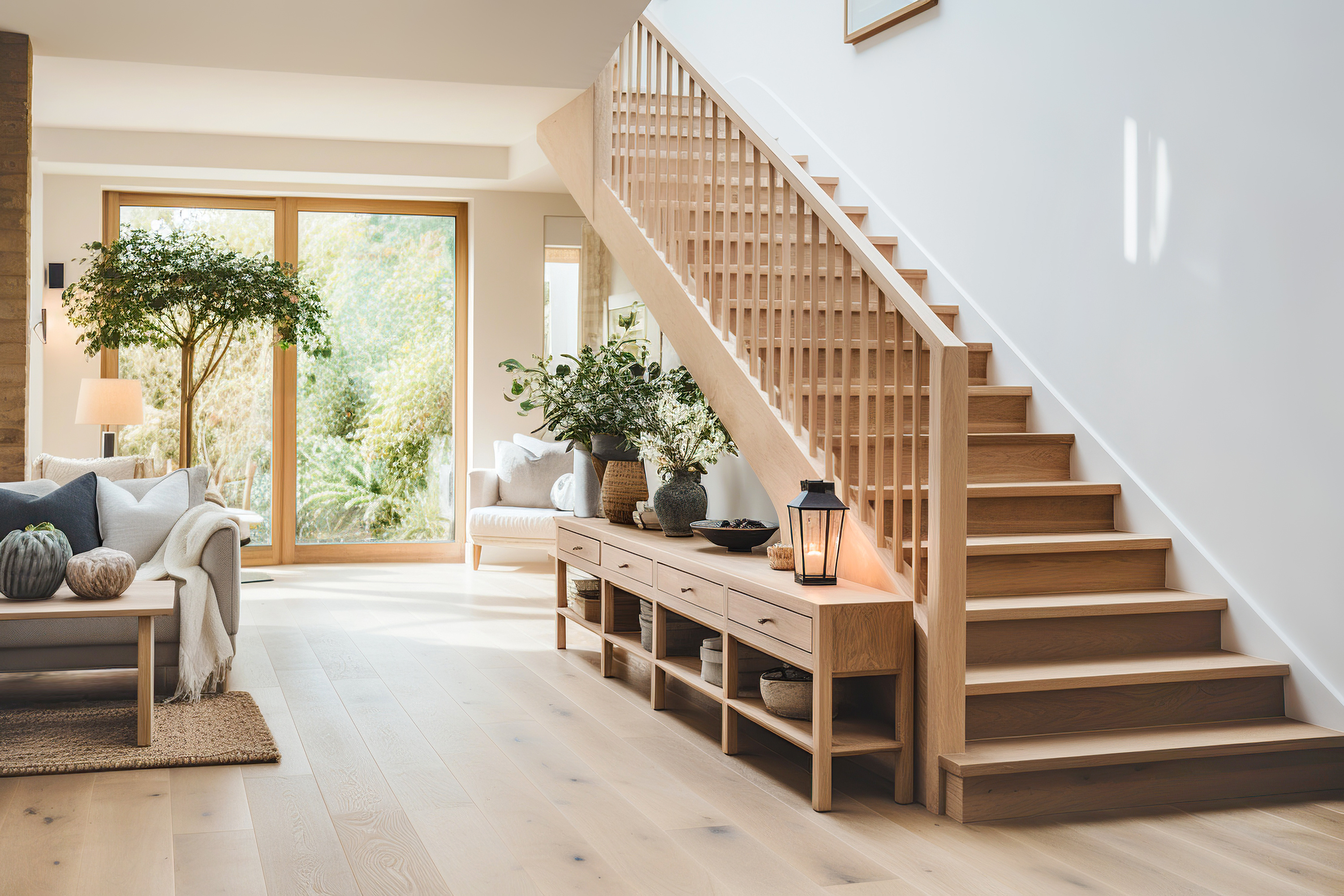
You might first notice it on a sticky July afternoon: the bedroom door suddenly scrapes the floor, or tiny gaps disappear between your planks. Then in February, the opposite happens — gaps show up, boards feel a little looser, and you wonder if something went wrong with your hardwood. In our South Jersey climate, that’s usually not bad installation. That’s humidity doing its thing.
Why Hardwood Reacts to South Jersey’s Humidity Swings
Hardwood is a natural material, so it constantly takes in and releases moisture from the air. In our hot, humid summers, boards absorb moisture and swell. In our dry, heated winters, they lose moisture and shrink.
Here in places like Moorestown and the Delaware River communities, we see:
- July–August: 70%+ humidity, frequent thunderstorms, and damp air
- January–February: freezing temps, heat running nonstop, very dry indoor air
That back‑and‑forth movement is why you might see seasonal gaps, slight cupping, or doors that stick. If you want to dig into the basics first, our hardwood overview is a good starting point for understanding hardwood options before you go too far down the humidity rabbit hole.
Common Humidity‑Related Issues (And What’s “Normal”)
A little movement is completely normal. Hardwood isn’t supposed to look like plastic.
Typical, not-a-problem changes:
- Hairline gaps between boards in winter that mostly close in summer
- Very slight cupping (edges just a bit higher than the center) during long humid stretches
- A door or two that gets a bit tight in August, then loosens up in January
Red flags to watch for:
- Persistent cupping that doesn’t relax when humidity drops
- Crowning (board centers higher than the edges) after a spill or leak
- Buckling or planks lifting off the subfloor
- Soft spots or a musty smell, especially in first‑floor rooms over damp crawlspaces
Issues in riverfront areas like Cinnaminson often trace back to excess moisture under or around the home, not just the air in the room. That’s where a proper inspection of the subfloor and moisture levels really matters. Our team looks at those conditions before recommending specific engineered hardwood options so you’re not fighting your floors every season.
Engineered vs. Solid Hardwood in a Humid Climate
Both solid and engineered hardwood are real wood, but they behave differently in South Jersey’s climate.
- Solid hardwood is one solid piece of wood. It’s beautiful and can be sanded multiple times, but it expands and contracts more with humidity swings. That makes it more sensitive in areas over damp crawlspaces or on concrete slabs.
- Engineered hardwood has a real wood top layer over a cross‑ply core. That layered construction is much more stable, so it handles our humid summers and dry winters with fewer gaps and less cupping.
In many homes around Mount Laurel and similar developments, we lean toward engineered hardwood flooring for first floors, kitchens, and any space over concrete. You still get the look of oak, hickory, or maple, but with movement that’s easier to live with. For traditional living rooms and dining rooms with good subfloors, classic solid hardwood flooring still makes a lot of sense — it just needs the right prep and humidity control.
Practical Tips to Protect Your Floors from Humidity
You don’t have to obsess over every percentage point on a hygrometer, but a few habits go a long way:
- Keep indoor humidity in a healthy range. Aim for roughly 35–55% year‑round. A whole‑house humidifier in winter and a dehumidifier in sticky months can make a big difference.
- Use exhaust fans. Run fans in kitchens and baths to vent steam outside, not into nearby hardwood.
- Control moisture below the floor. In crawlspace or slab‑on‑grade homes, proper vapor barriers and subfloor prep are crucial. Our installers address this during flooring installation and services so your new floors aren’t sitting over a damp base.
- Acclimate the wood before installation. Letting the material sit in your home for the right amount of time before installation helps it settle into your specific conditions. We build this step into our process, not as an afterthought.
- Choose species and finishes wisely. Stable, versatile species like oak hardwood flooring tend to handle seasonal shifts better than some more delicate woods, especially in busy family spaces.
If you’re dreaming of wide planks or textured looks, you can also browse our wide-plank hardwood and other styles to see what might fit your home and lifestyle.
With over 20 years working in South Jersey homes, we’ve watched how our humidity treats different wood floors season after season — and we plan installations around that reality. If you’re seeing gaps, cupping, or just starting to plan a new project, the Rodrigues brothers and our team are happy to take a look and talk through your options. The easiest next step is to schedule your free flooring estimate, and we’ll help you choose hardwood that looks beautiful and behaves well in your home year‑round.