

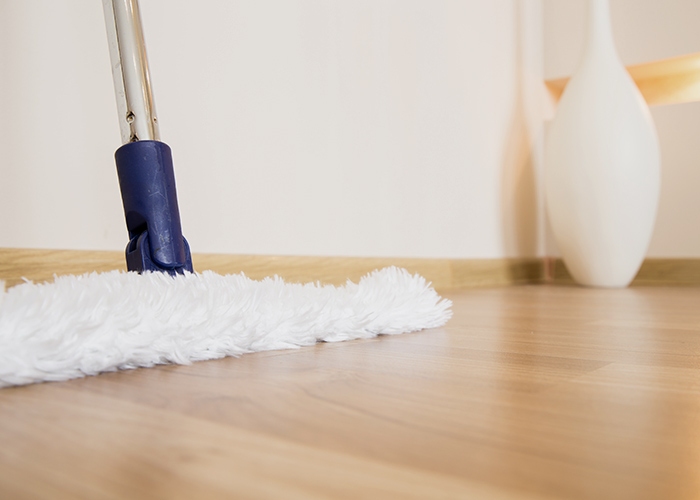
Two things dull a luxury vinyl floor: grit ground in underfoot, and a haze left behind by the wrong cleaner. Keep both off the surface and a luxury vinyl plank floor holds its look for years with almost no effort. The rest comes down to the one layer that decides how your floor ages, so that is where cleaning has to start.
What the Wear Layer Is, and Why Cleaning Revolves Around It
The wear layer is the clear, tough top coat on every luxury vinyl plank, and it's the part your mop, your dog's nails and your kitchen chairs actually touch. It sits above the printed design film that gives the plank its wood or stone look, so once that top coat clouds or scratches, the pattern underneath looks tired too. Luxury vinyl is built in layers for exactly this reason, and the wear layer is measured in mils, or thousandths of an inch, where a thicker one shrugs off more traffic before it starts to show. If you are still shopping, you can filter the luxury vinyl we carry by wear-layer thickness and match it to how hard the room works.
Cleaning a luxury vinyl floor is really wear-layer care. A cleaner that etches the top coat, or grit that sands it, is what turns a 5-year-old floor dull, and neither one shows up overnight. Because the design film sits just below that clear coat, the damage reads as a general haze or a loss of depth rather than an obvious scratch, which is why so many people blame the floor when the real culprit is a bottle of the wrong cleaner or a doormat that was never put down. That slow, invisible wear is why the daily habits matter more than any product you can buy, and why a floor cleaned well at year one still looks new at year ten while an identical floor two doors down looks worn. None of it takes effort. It takes the right habits, kept up.
The Everyday Routine That Keeps LVP Looking New
A luxury vinyl floor needs only two regular jobs: get the grit off, and damp-mop with a pH-neutral cleaner. Sweep, dust-mop or vacuum the walking paths often, because loose sand and dirt are abrasive and every footstep drags them across the wear layer. For the wet clean, a well-wrung microfiber mop and a pH-neutral floor cleaner lift the film that dulls a surface without leaving a film of their own behind.
Keep the mop damp, never soaking. Luxury vinyl planks lock together at the seams, and a flooded floor lets water sit in those joints and work down to the subfloor, where it does no good and can cause trouble over time. Wring the mop until it feels barely moist, work in sections, and the floor dries on its own in a few minutes. That's the whole routine, and it's why luxury vinyl earns its reputation as an easy floor to live with.
What to Keep Off a Luxury Vinyl Floor
Three popular cleaning shortcuts quietly damage luxury vinyl: steam mops, vinegar, and wax or polish. COREtec, one of the luxury vinyl lines we carry, tells owners to keep a steam mop off the floor unless the maker's own care guide approves it, to clean with a pH-neutral product instead of vinegar, and to keep wax, polish and citrus cleaners off the floor entirely. Each one backfires for a different reason, and it helps to know why.
Steam forces heat and moisture into a floor that's built to resist both from above, never up through the seams. A steam mop pushes hot vapor down between the planks, the one path water is not supposed to take, and the heat can soften the very surface it's meant to clean. Vinegar fails a different way: it is acidic, and acid slowly wears at the clear top coat it is supposed to brighten. The floor looks better for a day, because the acid strips the film, then a little duller each month as it strips finish along with it.
Wax and floor polish create the opposite problem. Luxury vinyl already carries its finish on the plank, so a coat of wax builds a film the floor never needed, and that film hazes, yellows and traps dirt until someone has to strip it back off. If your floor has gone cloudy, the cause is usually old product sitting on it, and the fix is to clean the residue off rather than pile on another coat.
Prevention Does More Than Any Cleaner
Preventing wear does more for luxury vinyl than any cleaner, and most of it happens at the door and under the furniture, long before a mop gets involved. A walk-off mat at every entrance catches the grit and grocery-bag sand before it reaches the floor, and that one habit does more than any product, because grit is the abrasive that dulls a wear layer fastest. Felt pads under chair and table legs stop the fine scratching that furniture drags in day to day, and lifting a heavy piece instead of sliding it keeps gouges out of the plank.
Sun and hard casters are the two other things worth a thought. Long hours of direct sun can fade any floor over the years, so the same blinds that keep a room comfortable also protect the planks. Hard plastic chair casters, the kind on a lot of office chairs, are rough on vinyl, and a soft rubber caster or a simple chair mat spares the surface where you roll around most.
Questions We Get About Cleaning Luxury Vinyl
Can I use a steam mop on luxury vinyl if I am quick about it?
Skip the steam mop unless your floor's own care guide specifically approves one. Steam drives heat and moisture straight into the seams, and moving fast does not change the direction it pushes water. A damp microfiber mop cleans just as well with none of the risk.
What is the best cleaner for LVP?
A pH-neutral floor cleaner is the safe default for luxury vinyl. Neutral means it sits in the middle of the pH scale, which runs from 0 to 14 with 7 at the center, so it's neither acidic like vinegar down near 2 nor strongly alkaline like a heavy degreaser, and it lifts dirt without touching the wear layer. A cleaner labeled pH-neutral, or one made specifically for luxury vinyl, will do the job.
How do I get scuffs off without scratching the floor?
A scuff lifts off luxury vinyl with a soft cloth and a little pH-neutral cleaner, or an old trick, a clean tennis ball rubbed over the mark. Keep anything abrasive away from it. Scouring pads, powders and melamine eraser sponges act like mild sandpaper on a wear layer, and they leave a dull patch where the scuff used to be.
Do I ever need to wax or reseal luxury vinyl?
No. Luxury vinyl arrives with its wear layer already on it and is a no-wax floor by design, so waxing or sealing only adds a film that hazes and has to be stripped off later. When the shine fades, the answer is almost always to clean old residue off rather than add a coat.
Keep Your Floors Looking Their Best
Clean it smart and a luxury vinyl floor pays you back with years of easy upkeep: grit off the surface, a pH-neutral damp mop, and none of the steam, vinegar or wax that quietly wear it down. If you're choosing new luxury vinyl and want a wear layer matched to a busy household, or you just want the floors you have looked at by someone local, ask for a free in-home estimate and we'll talk it through in your own rooms.


