

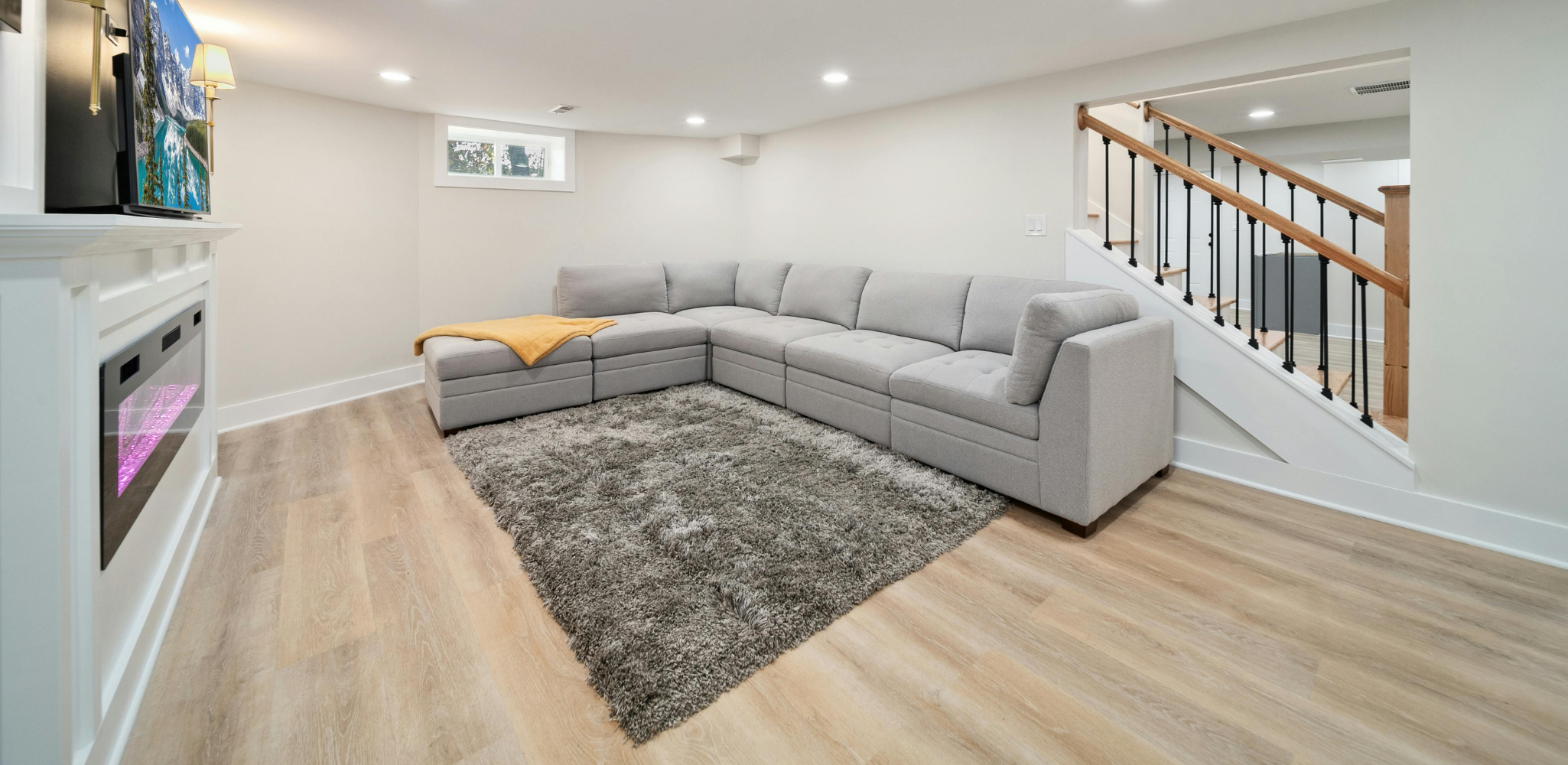
Yes and no. A quality luxury vinyl plank really is waterproof: the plank itself won't swell or stain from water the way wood or laminate does. But the installed floor is only as dry as the subfloor beneath it, so waterproof is a property of the plank, and the room around it still has to be handled on its own terms. That gap matters most in a South Jersey basement or bathroom, where the water that ruins a floor usually comes up from below or sits at the edges rather than spilling across the top.
What Waterproof Actually Means on a Luxury Vinyl Floor
Waterproof, on a luxury vinyl floor, means the plank will not absorb water, swell or stain the way wood and laminate can, and that is a real, useful property. A rigid-core luxury vinyl plank is built around a rigid core of mineral or composite that shrugs off standing water, so a spill, a wet mop or a mud-tracked entry does the surface no harm.
Manufacturers lean on this hard. COREtec, one of the luxury vinyl lines we carry, calls its floors 100% waterproof, and in the same breath tells owners to wipe up wet spills promptly, which is the quiet admission that the plank and the room are two different questions.
The waterproof part is the plank. What the word leaves out is the seams between planks, the perimeter gaps along the walls, and the subfloor underneath, and those three are exactly where basement and bathroom water actually ends up. A floor made of waterproof planks is not the same thing as a waterproof room, and the difference is where most disappointments with luxury vinyl in wet spaces come from.
The Real Risk in a Basement: What Is Under the Floor
In a basement, the water that ruins a floor usually comes up through the concrete slab, and a waterproof plank does nothing to stop it; it only hides it. Concrete is porous, and a below-grade slab sits in constant contact with damp soil, so moisture rises through it as vapor. Lay a waterproof floor over a slab that is giving off too much of that vapor and you have sealed the moisture between the slab and the plank, in the dark, which is the exact condition mold grows in. This is why the standard for slab moisture exists: ASTM F2170 measures the relative humidity inside a concrete slab with a probe, and it was written because moisture left trapped under a floor can debond it and grow mold, so manufacturers generally call for the test before a floor goes down.
A waterproof floor can actually make a slab-moisture problem worse by sealing it in, which is the opposite of what the label leads people to expect. The fix is a dry slab. Our crews test the concrete and add mitigation where it's needed before the floor goes on, because a moisture barrier or a mitigation coating over a slab that reads high is what protects the assembly the plank can't protect by itself. A better plank cannot substitute for a dry base.
Bathrooms: Waterproof Helps, but the Edges Decide
In a bathroom, luxury vinyl's waterproof core is a genuine advantage over laminate or wood, but whether the floor lasts comes down to the edges and the install. Water on a bathroom floor finds the perimeter first, around the toilet, along the tub and at the doorway threshold, and it works downward at any gap it finds. The planks themselves come through fine, but water that slips past them pools on the subfloor, where it can rot a wood subfloor or feed mold just as a damp slab would. A bathroom luxury vinyl floor lasts when the perimeter is sealed or protected, the subfloor is sound, and standing water gets wiped up instead of left to sit. Waterproof buys you real forgiveness against splashes and quick spills; it does not turn the room into a wet area you can flood.
So Where Can You Actually Put Waterproof Luxury Vinyl?
Waterproof luxury vinyl is a strong, honest choice for basements, bathrooms, kitchens, laundry rooms and entryways, as long as the subfloor is handled first. On a basement slab, that means a moisture test and, where the reading is high, mitigation before the floor goes down. In a bathroom, it means a sound subfloor and real attention to the perimeter. Handled that way, waterproof luxury vinyl is one of the best-value floors you can put in a room that sees water, and you can filter the luxury vinyl we carry for water protection and below-grade approval to start from products rated for the job. Where it goes wrong is when the word waterproof is treated as a reason to skip the subfloor, and that single shortcut is what turns a great floor into a mold problem.
Questions About Waterproof Luxury Vinyl
Can I put luxury vinyl in a basement that sometimes floods?
Waterproof luxury vinyl handles occasional dampness and spills well, but a basement that truly floods is a different problem. The planks won't be ruined by water sitting on top of them for a short time, yet water trapped underneath, against the slab, can grow mold and lift a floating floor. If your basement takes on water, fix the water source first; after that, a moisture-tested slab and the right waterproof floor is a sensible choice.
Does waterproof luxury vinyl mean I can skip the subfloor moisture test?
No. Waterproof describes the plank; the slab under it is a separate question. A concrete subfloor still has to pass a moisture test such as ASTM F2170 because moisture trapped beneath a waterproof floor has nowhere to escape, and it can grow mold or debond the floor. The test protects the part of the assembly the plank was never able to protect.
Will water get under luxury vinyl planks?
Water can get under luxury vinyl planks at the seams and along the perimeter. Click-together luxury vinyl fits tightly, but it isn't sealed the way a poured floor is, so standing water at an edge or a gap can migrate underneath over time and settle on the subfloor. That's why a waterproof plank still wants a sound, dry subfloor and prompt cleanup of standing water. The planks survive; what sits under them may not.
Is luxury vinyl or tile better for a wet basement?
Both work over a properly prepared slab, and the choice is really about feel and budget. Porcelain tile is impervious in a way vinyl is not, absorbing 0.5% or less of its weight in water under ANSI A137.1, the ceramic-tile standard, so it handles surface water even better; but tile is hard, cold and pricier to install. Luxury vinyl is warmer, softer, quicker to lay and easier on the budget. Either way the slab has to be moisture-tested first, because neither floor cures a wet basement on its own.
Get It Right From the Slab Up
Waterproof luxury vinyl earns its reputation in the rooms most likely to see water, as long as the floor starts from a dry, sound subfloor instead of from the promise on the box. If you're weighing luxury vinyl for a basement or a bath, ask for a free in-home estimate and we'll check the subfloor, talk through moisture testing where it's a slab, and steer you to floors rated for exactly where you want them.


