

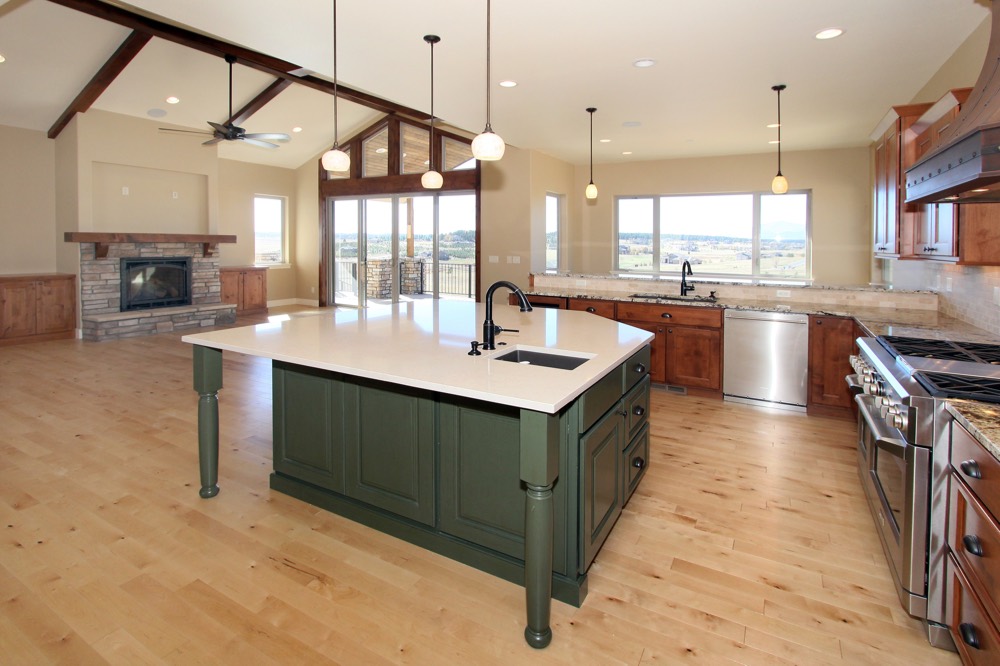
For most kitchens, luxury vinyl and porcelain tile shrug off water and traffic more easily than hardwood, while hardwood trades some of that toughness for warmth, character and resale value. Which one is right for your kitchen comes down to four things the room does to a floor every day: it spills, it drops heavy pans, it scrapes chairs back and forth, and it makes you stand on it for hours. Match the floor to those four stresses and the choice gets a lot simpler.
What a Kitchen Actually Does to a Floor
A kitchen tests a floor in four specific ways, and each material answers them differently. Water is the first: spills, a dishwasher that weeps and regular mopping all mean the floor gets wet, and how a material handles moisture is what separates the safe kitchen picks from the risky ones. Impact is the second, because a dropped cast-iron pan or a full jar of sauce hits a kitchen floor harder than anything a bedroom ever sees. Abrasion is the third, from stools dragged across the same two feet of floor and grit tracked in from the yard. Comfort is the fourth, and it's the one people forget until they've cooked a holiday dinner: a floor you stand on for hours is either kind to your back and legs or it isn't.
The Kitchen Floor Comparison, by the Numbers
Here is how luxury vinyl, porcelain tile and hardwood stack up against those four stresses, with the durability and slip figures tied to the standards that define them. Read down the column that matters most for the way you use your kitchen.
Floor | Water | Wet-floor slip | Durability grade | Underfoot |
Luxury vinyl | Waterproof core; seams and subfloor still matter | Depends on the surface texture | Wear layer in mils; dents but rarely cracks | Warm, quiet, softer to stand on |
Porcelain tile | Near-impervious, absorbs 0.5% or less (ANSI A137.1) | Rated tile meets 0.42 wet DCOF (ANSI A326.3) | PEI abrasion class; PEI 3 or higher for kitchens | Hard and cold underfoot |
Hardwood | Not waterproof; wants 30-50% indoor humidity (NWFA) | Varies with the finish | Janka hardness: red oak 1,290, hickory 1,820 lbf | Warm, and can be refinished |
The table shows why there's no single winner. Porcelain tile is the most water- and abrasion-proof surface in the room, and also the hardest on dropped dishes and bare feet. Hardwood is the warmest and the only one you can sand and refinish instead of replace, and also the one that cares most about moisture. Luxury vinyl sits in the middle: waterproof and comfortable, softer than tile in every sense of the word, and the easiest of the three to live with day to day.
Luxury Vinyl in the Kitchen
Luxury vinyl is the easiest floor to own in a kitchen, because its core is waterproof and its surface is warm, quiet and forgiving underfoot. A spill that would worry you on hardwood simply wipes up, and a glass dropped on luxury vinyl is more likely to survive than the same glass dropped on tile. The trade-offs are real, though. That waterproof claim is about the plank itself, so water can still creep into the seams and sit on the subfloor if a leak goes unnoticed, and the soft surface that saves your dishes will dent under a dropped chef's knife or scratch under tracked-in grit when the wear layer is thin. For a hard-working kitchen, it pays to filter the luxury vinyl we carry by wear-layer thickness so the surface is matched to the traffic it will take.
Porcelain and Ceramic Tile in the Kitchen
Porcelain tile is the most water- and wear-resistant floor you can put in a kitchen, and the numbers behind that reputation are worth knowing. Under ANSI A137.1, the ceramic-tile standard published through the Tile Council of North America, a tile only earns the name porcelain if it absorbs 0.5% or less of its weight in water, which is why porcelain barely registers a spill. Ordinary ceramic runs higher, from roughly 0.5% up past 7%, so it's a little more porous. Tile also carries a wear grade called a PEI rating, a 0-to-5 abrasion scale, and a kitchen wants a tile rated PEI 3 or higher, the class built for regular household foot traffic.
The one number to check twice on a kitchen tile is slip. A wet tile floor can be slick, so the industry set a threshold: under ANSI A326.3, a tile meant for an interior floor that gets walked on wet should test at 0.42 or higher on the wet dynamic coefficient of friction, the lab measure that stands in for grip. A tile at or above 0.42, usually a textured or matte one rather than a high gloss, is the safer bet by the sink and stove. What tile asks in return is comfort. It's hard and cold underfoot, unkind to a dropped wine glass, and tiring to stand on through a long dinner prep, which is why so many tiled kitchens keep a cushioned mat at the sink. You can weigh our porcelain and ceramic tile with those two numbers, absorption and slip, in mind.
Hardwood in the Kitchen
Hardwood works in a kitchen when you manage the moisture and choose a hard enough species, and in return it gives you warmth and a floor you can refinish rather than tear out. Wood is graded for hardness on the Janka scale, which records the pound-force needed to drive a 0.444-inch steel ball halfway into a board: red oak comes in at 1,290, white oak at 1,360, and hickory, one of the hardest domestic species, at 1,820 lbf, so an oak or hickory floor takes kitchen traffic in stride.
The catch is water and air. The National Wood Flooring Association, the trade group that writes the U.S. standards for wood floors, puts a wood floor's comfortable range at about 30 to 50 percent relative humidity and 60 to 80 degrees, and a kitchen that stays wetter or drier than that for long can gap or cup a solid floor over the seasons.
Construction is what tips the odds. Engineered hardwood, which layers a real wood veneer over a cross-built plywood core, moves less with moisture than a solid plank and is the steadier choice near a kitchen's water, a difference the about-hardwood guide walks through in more detail. Standing spills still have to be wiped up quickly on any wood floor. If you love the look and want it done right, the hardwood we stock runs to species and constructions that suit a kitchen. Hardwood is the highest-maintenance of the three floors here, and for plenty of homeowners the warmth and the resale value make that upkeep worth it.
So Which Floor Wins Your Kitchen?
The winner depends on which kitchen stress you weight most heavily. Choose porcelain tile if water and long-term wear top your list and you don't mind a hard, cool floor.
Choose luxury vinyl if you want waterproof and comfortable with the least fuss and a friendlier price.
Choose hardwood if warmth, character and resale value matter most and you're willing to wipe spills and mind the humidity.
Plenty of kitchens land on tile or luxury vinyl for exactly those reasons, while open-plan homes often run hardwood straight from the living room into the kitchen to keep one continuous floor, and take on the extra care as part of the deal.
Kitchen Flooring Questions We Hear Most
Is hardwood a bad idea in a kitchen?
Hardwood works in a kitchen, but it's the highest-maintenance of the common choices. Wipe spills quickly, keep indoor humidity in the 30-to-50-percent band the NWFA recommends, and lean toward engineered construction and a harder species like oak or hickory. Handled that way, wood floors run through plenty of kitchens; skip the moisture care and a solid floor can gap or cup within a few seasons.
What is the most waterproof kitchen floor?
Porcelain tile and luxury vinyl are the two waterproof kitchen floors, and they get there by different routes. Porcelain absorbs 0.5% or less of its weight in water under ANSI A137.1, so the tile body itself is nearly impervious, while luxury vinyl has a waterproof core that turns away surface water. Tile keeps water out at the grout lines when they're sealed; luxury vinyl's weak point is its seams. Either way, a floor that isn't left standing wet lasts longest.
Is porcelain tile too slippery for a kitchen?
Porcelain tile isn't automatically slippery; you just have to read the rating. A tile made for a wet interior floor should meet a wet DCOF of 0.42 or higher under ANSI A326.3, and a textured or matte finish grips better than a polished one. For a kitchen, picking a tile at or above that slip number matters more by the sink and the stove than anywhere else in the house.
Which kitchen floor is easiest on my legs?
Luxury vinyl and hardwood are both easier to stand on than tile. Each has a little give underfoot, and neither pulls heat from your feet the way a tile floor does, so both feel warmer and softer through a long stretch at the counter. Tile is the hardest and coldest of the three, which is why kitchens finished in tile so often end up with a padded mat where the cook stands.
Pick the Kitchen Floor That Fits Your Life
The best kitchen floor is the one matched to how you cook and how much upkeep you want to take on: tile for water and wear, luxury vinyl for easy waterproof comfort, hardwood for a warmth you can refinish. If you'd like to see samples in your own light and get a straight answer for your kitchen, book a free in-home estimate and we'll measure the room and talk through the trade-offs with you.


