

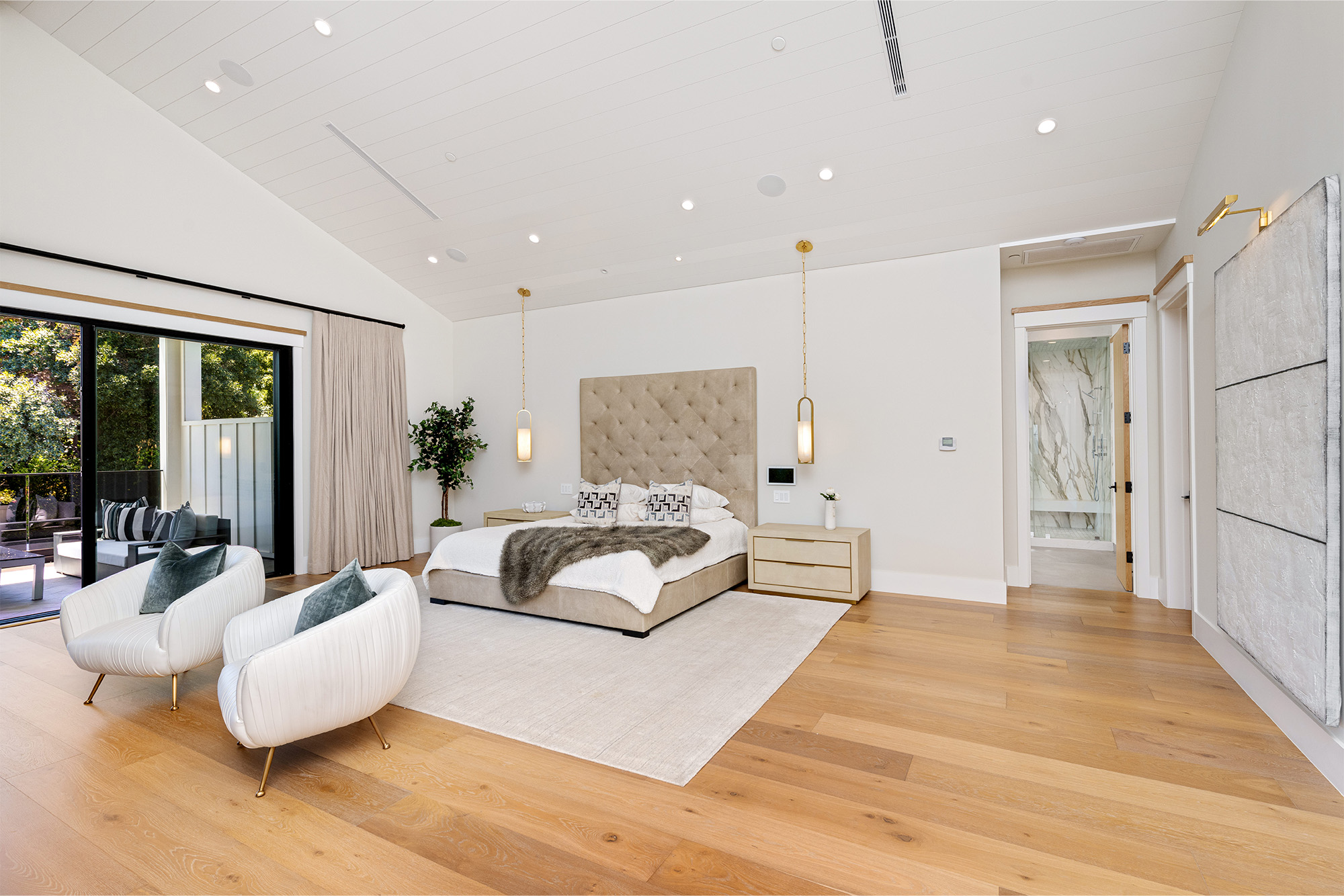
If you’re remodeling, you’ve probably gone down the laminate vs. hardwood rabbit hole already. They can look almost identical in photos, but they behave very differently once they’re in your home — especially with our humid summers, dry winters, and plenty of muddy shoes coming in and out.
Instead of asking “which one is better,” it’s more helpful to ask: which one makes the most sense in each room of your house?
Below, we’ll walk room by room and share how we usually guide homeowners when we’re looking at samples together in our Moorestown showroom.
Living rooms and family rooms: start with how you actually live
These are the spaces that see everything: kids, pets, snacks, movie nights, and sometimes a glass of red wine that doesn’t quite make it back to the coffee table.
Laminate makes sense if:
- You want the hardwood look without worrying as much about scratches from pets or toy cars.
- You’re working with a tighter budget but still want a stylish, updated space.
- You like the idea of a floor that doesn’t fade or change much over time.
Modern options in our laminate flooring collection have realistic wood visuals, built‑in scratch resistance, and some lines are water-resistant enough to shrug off everyday spills.
Hardwood makes sense if:
- You love the warmth and character of real wood and want that classic feel.
- You’re okay with a little patina and the idea that you might refinish down the road.
- You see this as a long-term investment that can add value to your home.
If you’re drawn to natural materials and plan to stay put for a while, browsing our hardwood flooring options is a great way to see the difference in grain, tone, and plank size in person.
Quick takeaway: For busy, kid‑and‑pet households, laminate often wins on practicality. For a more formal living room or a “forever home,” hardwood is hard to beat.
Kitchens, mudrooms, and everyday entryways: moisture is the deal-breaker
In our climate, these areas see wet boots in winter, humidity in summer, and plenty of spills year‑round. That’s where you have to think beyond looks.
Traditional hardwood can work in a kitchen if you’re careful with maintenance and quick with spills, but it doesn’t love standing water or repeated moisture. Gaps and cupping are real possibilities in a busy household.
Laminate has come a long way here. Many lines have water-resistant cores and tight locking systems, making them much more forgiving around sinks and dishwashers. The key is choosing the right construction and having a good installation, including proper transitions and trim. Our flooring services cover all those details — from subfloor prep to baseboards — so the whole system works together.
If you know your kitchen and mudroom are constant “splash zones,” you might also want to look at luxury vinyl plank as a third option. It has the wood look you want but is fully waterproof, which is why you’ll see it featured in many of the projects in our completed installation gallery.
Quick takeaway: In moisture‑prone spaces, laminate or luxury vinyl usually makes more sense than hardwood, unless you’re very disciplined about maintenance and really want that real‑wood feel.
Bedrooms, home offices, and upstairs spaces: comfort and noise
Upstairs, the priorities usually shift. You’re thinking about warmth underfoot, how sound travels, and how much wear the floor will actually see.
Hardwood is a beautiful choice in bedrooms and offices because these spaces tend to be gentler on floors. You get that cozy, natural look without as much risk of dents and spills.
Laminate works well here too, especially if you’re finishing multiple rooms at once and want to keep costs down. With the right underlayment, it can feel softer and help with noise between floors. If you’re not sure what style you’re drawn to yet, our flooring inspiration galleries are a helpful way to see different looks in real rooms before you start pulling samples.
Quick takeaway: In low‑traffic, upstairs spaces, you can safely choose based on budget and style more than durability. Both laminate and hardwood can be great — it really comes down to what you like and how long you plan to stay.
Basements and lower levels: think from the subfloor up
Basements in our area can be tricky. Even when they’re finished, there’s always the risk of moisture, minor seepage, or a future sump‑pump issue. That reality changes the conversation.
We’re honest about this: solid hardwood is almost never the right choice below grade. Engineered hardwood can sometimes work, but only with the right conditions and prep.
Laminate can be used in some basements, but you need a very dry space, proper vapor barriers, and good subfloor work. In many homes, luxury vinyl ends up being the safer “wood‑look” choice downstairs because it tolerates moisture better.
This is where having us look at your space really matters. During a visit, we can check the subfloor, talk about past moisture issues, and help you decide if laminate is realistic or if another material is going to serve you better long term.
Quick takeaway: In most basements, water tolerance comes first, style second. Sometimes that means skipping hardwood or laminate altogether in favor of luxury vinyl.
Bringing it all together
Choosing between laminate and hardwood isn’t about picking a “winner.” It’s about matching the right floor to each room, your lifestyle, and our local climate. In some homes, that means a mix: maybe laminate in the kitchen and family room, hardwood on the stairs, and luxury vinyl in the basement.
If you’d like help mapping that out, you can tell us about your rooms, pets, and plans, and we’ll walk you through options, samples, and pricing. When you’re ready, you can start the process by requesting a free in‑home estimate, and we’ll help you figure out what makes the most sense for your home, room by room.