

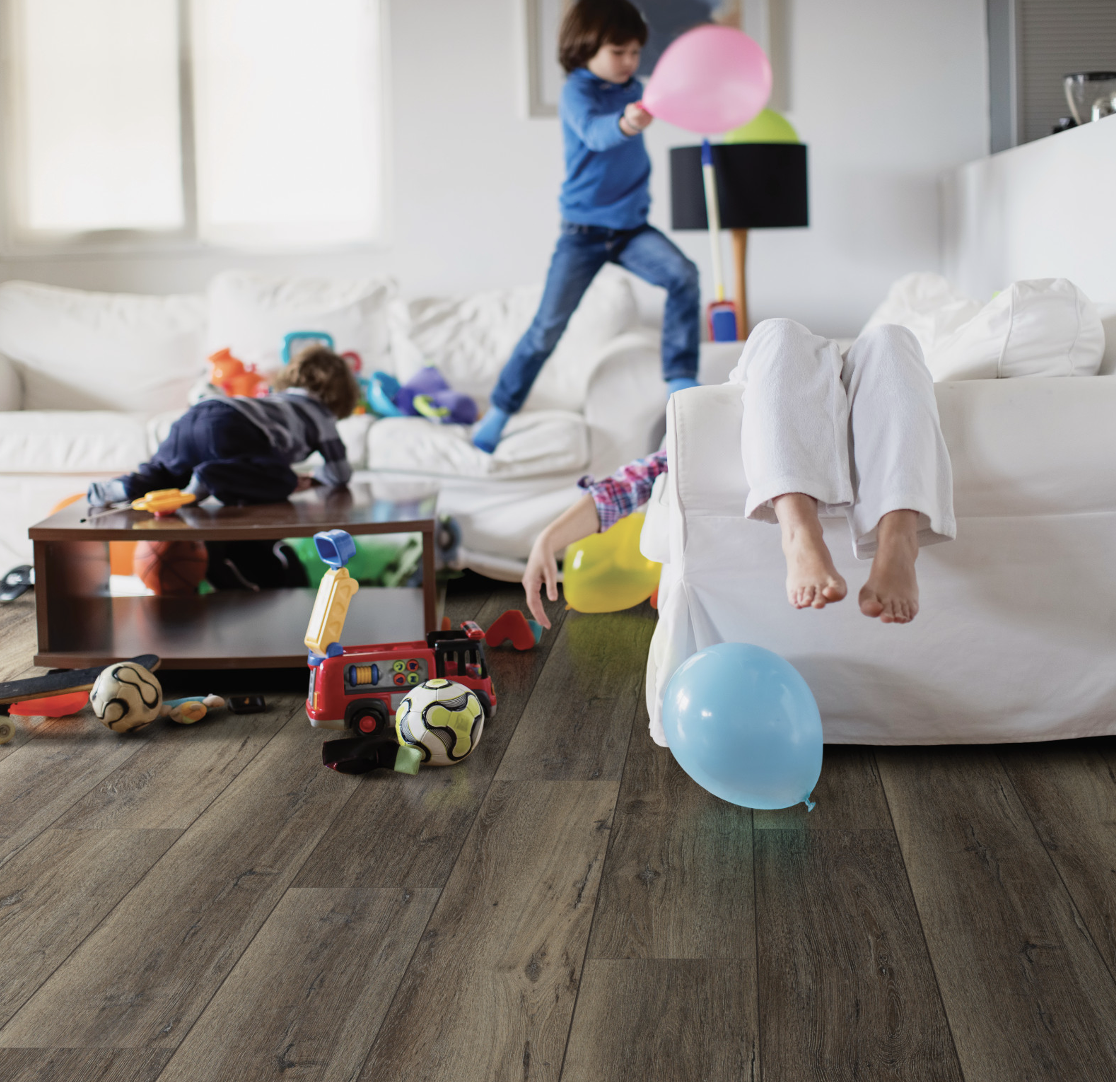
You pick out a beautiful laminate floor, it gets installed, and then… every step sounds louder than you expected. Or the room still feels a little cold underfoot. When that happens, the problem usually isn’t the laminate itself — it’s what’s underneath.
If you’re updating floors in one of our older Colonials or a finished basement, the right underlayment makes a huge difference in noise, comfort, and how long your new floor lasts.
What laminate underlayment actually does (and why it matters)
Think of underlayment as a thin layer of “insurance” between your laminate and the subfloor. It’s usually a foam, felt, or cork pad that quietly handles a few important jobs:
- Softens each step so the floor feels more like a solid, finished surface and less like walking on a drum.
- Cuts down on noise — both the tapping sound in the room and the echo that travels to the floor below.
- Helps control moisture, especially over concrete or in basements.
- Smooths minor imperfections so the click-lock joints in your laminate don’t flex and break over time.
When we help you browse our laminate flooring selection, we’re always thinking about what needs to go underneath to keep it quiet, comfortable, and stable in our four-season climate.
Noise: how quiet can laminate really be?
Laminate has a reputation for being a little “clicky,” but underlayment can change that in a big way.
If you have kids, dogs, or a home office, you’ll want something with good sound absorption. Underlayments are often rated with STC (airborne noise, like voices) and IIC (impact noise, like footsteps). Higher numbers = quieter rooms.
Here’s how we usually think about it:
- Over wood subfloors on the main level, a quality foam or felt pad with sound reduction works well.
- Over concrete in basements, we lean toward products that combine sound control with a vapor barrier to keep moisture from creeping up.
If you’re sensitive to noise or have living space below the room you’re redoing, tell us that up front. We can match a quieter underlayment to the specific laminate you like, and we’ll also look at the subfloor during our flooring services to see if any prep is needed to avoid hollow spots or squeaks.
Comfort and moisture in South Jersey homes
Our humid summers and chilly winters are tough on floors. Underlayment helps even things out.
In basements and on concrete slabs, moisture is the big concern. Even if the concrete “looks dry,” it can still release vapor that slowly works its way up. That’s why many laminate manufacturers require either:
- A separate plastic moisture barrier under the pad, or
- A combined underlayment with an integrated vapor barrier.
Skipping that step can lead to swelling, musty smells, or damaged locking systems — and it can void your warranty.
Comfort-wise, a slightly thicker, denser pad can make a finished basement or first floor feel warmer and more forgiving underfoot. The key is choosing something that’s approved for your specific laminate; too soft, and the joints can flex. We’ve spent over 20 years balancing that line, and if your subfloor needs attention first, we can handle subfloor repair and prep as part of the installation.
Do you always need separate underlayment?
Some laminate planks come with a pad already attached. That can be convenient, but it doesn’t automatically mean you’re covered for your space.
A few tips we share with homeowners:
- Check what the built-in pad is designed for. Some are mainly for comfort and may not include a true vapor barrier.
- Read the installation instructions. Many brands are very specific about whether you can add an extra layer underneath. The wrong combo can cause too much flex.
- Think about where it’s going. A second-floor bedroom might be fine with the attached pad alone, while a basement usually needs added moisture protection.
When we look at your project, we’re not just helping you choose a color. We’re matching the plank, the underlayment, and the subfloor so everything works together. If you like to see how different floors could look in your rooms first, you can play around with styles in our inspiration galleries before we talk details.
How we help you get the underlayment right
Underlayment isn’t the glamorous part of a new floor, but it’s one of those behind-the-scenes choices that separates a “looks good for now” job from a quiet, comfortable floor that still feels solid years later.
When we come out to measure, we:
- Check for squeaks, dips, or soft spots that might need subfloor repair.
- Look at moisture risk (especially in basements and on slabs).
- Ask about noise concerns, pets, and how you actually use the room.
- Recommend an underlayment that fits your laminate choice and manufacturer requirements.
If you’re thinking about laminate for your home and want help sorting through the noise and moisture questions, you can request a free estimate and we’ll walk you through everything — from the plank you see to the underlayment you don’t.