

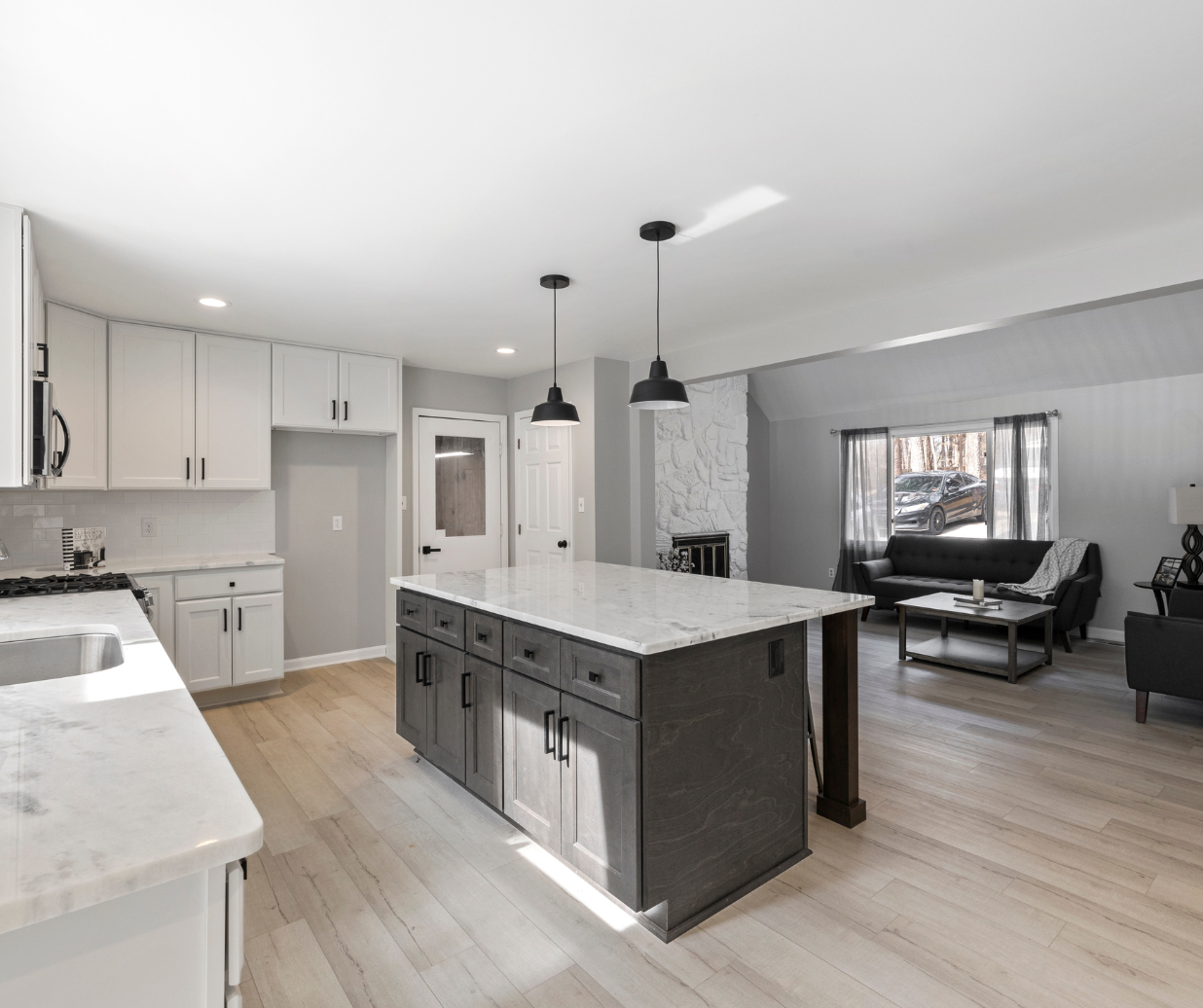
If you’ve opened up your kitchen to your living room or knocked down a wall between the dining and family room, you already know the upside: more light, better flow, and everyone hanging out together. The tricky part is making all those connected spaces feel like one intentional design instead of a patchwork of different rooms. That’s where laminate flooring really shines.
Why Laminate Works So Well in Open Concept Spaces
In an open layout, your floor becomes the “thread” that ties everything together. When that thread changes color, sheen, or texture from one area to the next, the whole space can feel choppy.
Laminate solves that by giving you long, continuous runs of the same look through your main level. You can carry one style from the front entry into the living room, across the kitchen, and even down the hall without worrying about transitions every few feet. Modern laminates mimic hardwood so closely that most guests will assume it’s real wood until you tell them otherwise.
Another big plus: open layouts usually mean high-traffic zones. Between kids, pets, and friends coming in and out, you need something that can take a beating. The options in our laminate flooring catalog include water-resistant and scratch-resistant styles that hold up to everyday life without constant babying.
Choosing a Color that Connects Every Room
In a closed-off home, you can get away with different flooring in each room. In an open plan, color and tone matter a lot more.
Here’s how we usually guide homeowners:
- Go a shade softer than you think. Very dark floors can look dramatic, but in a big, open area they show every speck of dust and can make the space feel heavy.
- Stick with a neutral undertone. Warm and cool tones can clash when you’re looking across a whole floor. Greige, natural oak, and light walnut looks are forgiving and play nicely with most furniture.
- Watch the wall color and cabinets. If your kitchen cabinets are dark, a medium or light laminate keeps things from feeling cave-like. If everything else is light, a slightly deeper floor can ground the space.
If you like the idea of wood but aren’t sure which direction to go, browsing our flooring inspiration galleries can help you see how different tones behave in real rooms.
Zoning Without Chopping Up the Floor
One common worry with open concept living is, “How do I define spaces if everything is one big room?” You don’t need different floors to do that; you just need smart layering.
We often recommend using the same laminate throughout, then adding:
- Area rugs to frame a seating area or dining table
- Changes in plank direction to subtly signal a new “zone”
- Trim and transitions only where they’re truly needed (like at stairs or a bathroom doorway)
Because we also handle trim work and subfloor prep as part of our flooring services, we can help you plan where to keep things seamless and where a transition actually makes sense. The goal is a layout that feels open, but still has cozy, defined spots for relaxing, eating, and working.
Planning an Open Concept Laminate Project with Us
In our South Jersey climate, you’re dealing with humid summers, cold winters, and plenty of foot traffic from garages and patios. That mix can be tough on floors, especially when everything is connected. With over 20 years in the business, we’ve learned how to choose laminate that handles those seasonal swings and still looks good years down the road.
If you like to see real projects before committing, our project gallery is a great way to get a feel for our installation quality and style. From there, we can talk about details like plank size, finish, and how to handle transitions at stairs, hallways, and adjoining rooms.
When you’re ready to start tying your open concept space together, you can request a free in-home estimate, and we’ll come out, measure, and walk through options with you—no pressure, just honest advice on what will work best in your home.