

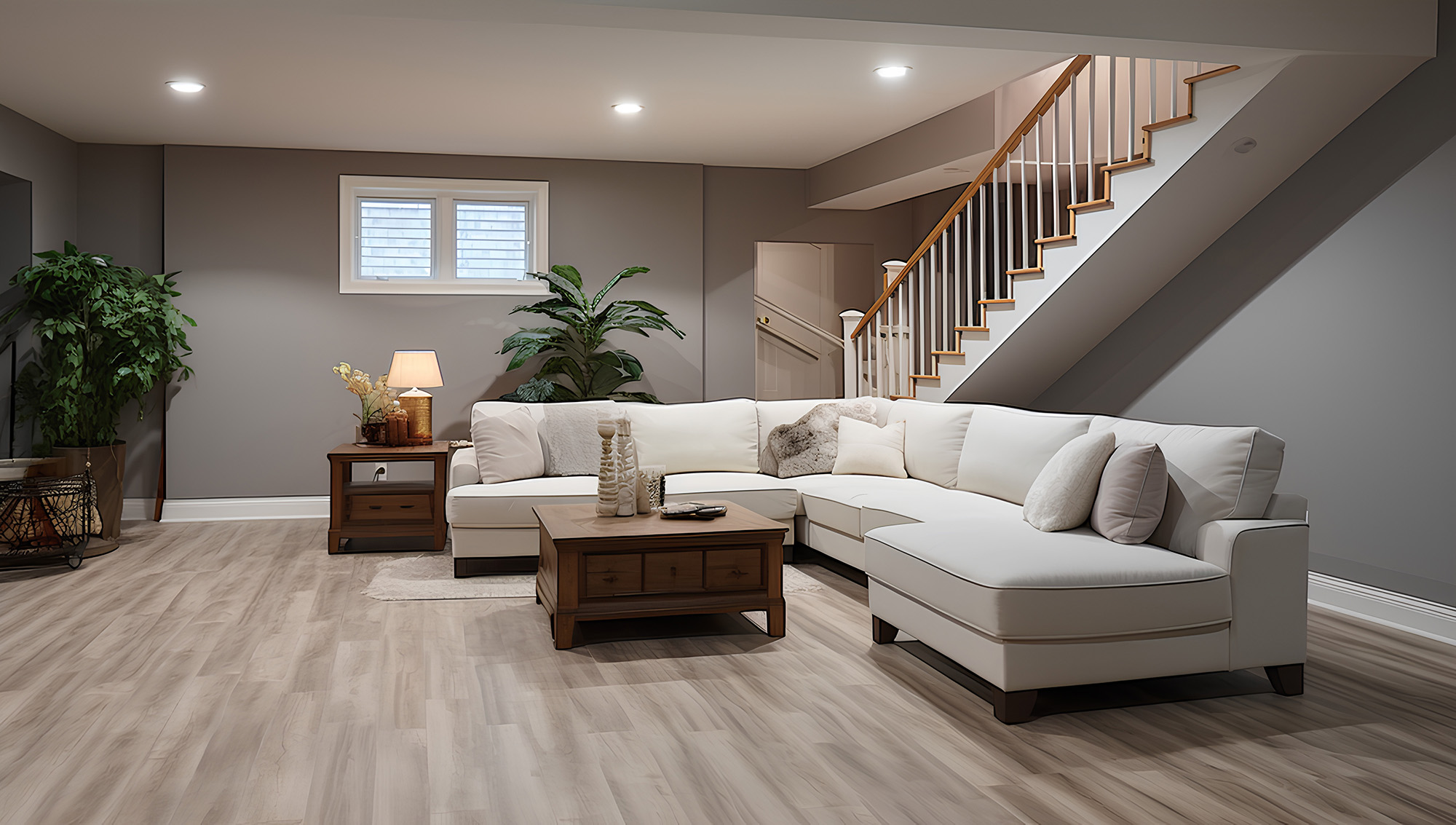
If you have a basement or lower level, you’ve probably had at least one “uh-oh” moment: a damp corner after a storm, condensation on the walls in August, or a tiny leak that turned into a bigger project than you planned. You want that space to feel like real living area — not a musty storage room — but you also don’t want to ruin new floors the first time humidity spikes.
That’s exactly where water-resistant laminate can be a smart middle ground.
Why Basements Are Tough on Floors
Basements and split-level lower floors fight a few battles at once: moisture coming up from the concrete, humid summer air, and cooler winter temperatures. Even if you’ve never had standing water, you may notice:
- Cold concrete that makes the room feel unfinished
- Occasional dampness or a musty smell after heavy rain
- Gaps, cupping, or movement in older wood or laminate
Traditional hardwood usually isn’t the best match for that environment, and basic laminate can swell if water sneaks into the seams. Water-resistant laminate is built to handle everyday moisture, spills, and humidity much better than older products, while still giving you the look of wood.
If you want to see what this looks like in real rooms, you can browse our laminate flooring styles and filter for water-resistant options.
What “Water-Resistant” Really Means (and What It Doesn’t)
When you hear “water-resistant,” think protection against life’s normal messes, not a guarantee against a full-on flood.
Most modern water-resistant laminates:
- Use a tighter locking system to keep spills on the surface longer
- Have a treated core that’s less likely to swell from short-term moisture
- Often carry a time-based guarantee (for example, protected for 24–72 hours against standing water, depending on the product)
That makes them great for basements that are generally dry but might see occasional dampness, pet accidents, or drink spills. If you’ve had serious water issues or a history of flooding, we’ll usually talk with you about luxury vinyl as well, since that category is fully waterproof. You can compare different looks and constructions in our flooring inspiration galleries to see what fits your space.
Don’t Skip the Subfloor: It Makes or Breaks the Project
Even the best laminate won’t behave if it’s sitting on a rough, cracked, or damp concrete slab. In our climate, basements can move and settle over time, and we often find:
- Hairline cracks or low spots in the slab
- Old adhesives or patchwork from previous flooring
- Moisture coming through an unsealed surface
Before we ever click a plank together, we check the moisture levels, address any problem areas, and make sure the surface is flat and stable. That prep might include leveling, sealing, or other subfloor repair so the new floor installs correctly and stays that way. You can see how subfloor work fits into the bigger picture in our overview of flooring services.
This step isn’t glamorous, but it’s one of the reasons properly installed laminate feels solid underfoot instead of hollow or “clicky.”
Laminate vs. Luxury Vinyl in Lower Levels
We’re often asked, “Should I do water-resistant laminate or luxury vinyl downstairs?” The honest answer: it depends on your basement’s history and how you use the space.
Water-resistant laminate is usually a great fit if:
- The basement is finished or mostly dry
- You want a very realistic wood look and feel underfoot
- You’re working with a tighter budget but still want durability
Luxury vinyl tends to win when:
- You’ve had water problems or want maximum peace of mind
- You’re finishing a laundry room, utility area, or playroom that sees a lot of mess
- You like the idea of a fully waterproof construction
Both can look beautiful and handle busy family life; the right choice just comes down to your home and comfort level. If you’d like to see how these materials look in real projects, our completed work gallery is a good place to start.
Ready to Turn Your Basement into Real Living Space?
If you’re tired of tiptoeing around moisture worries and want your lower level to feel as comfortable as the rest of your home, we’re here to help you sort through the options — from water-resistant laminate to waterproof luxury vinyl and everything in between. You can tell us a bit about your space, your budget, and any past moisture issues, and we’ll give you honest recommendations that make sense for your home.
When you’re ready to talk details, you can request a free estimate, and we’ll help you plan a floor that works for your basement and your everyday life.