

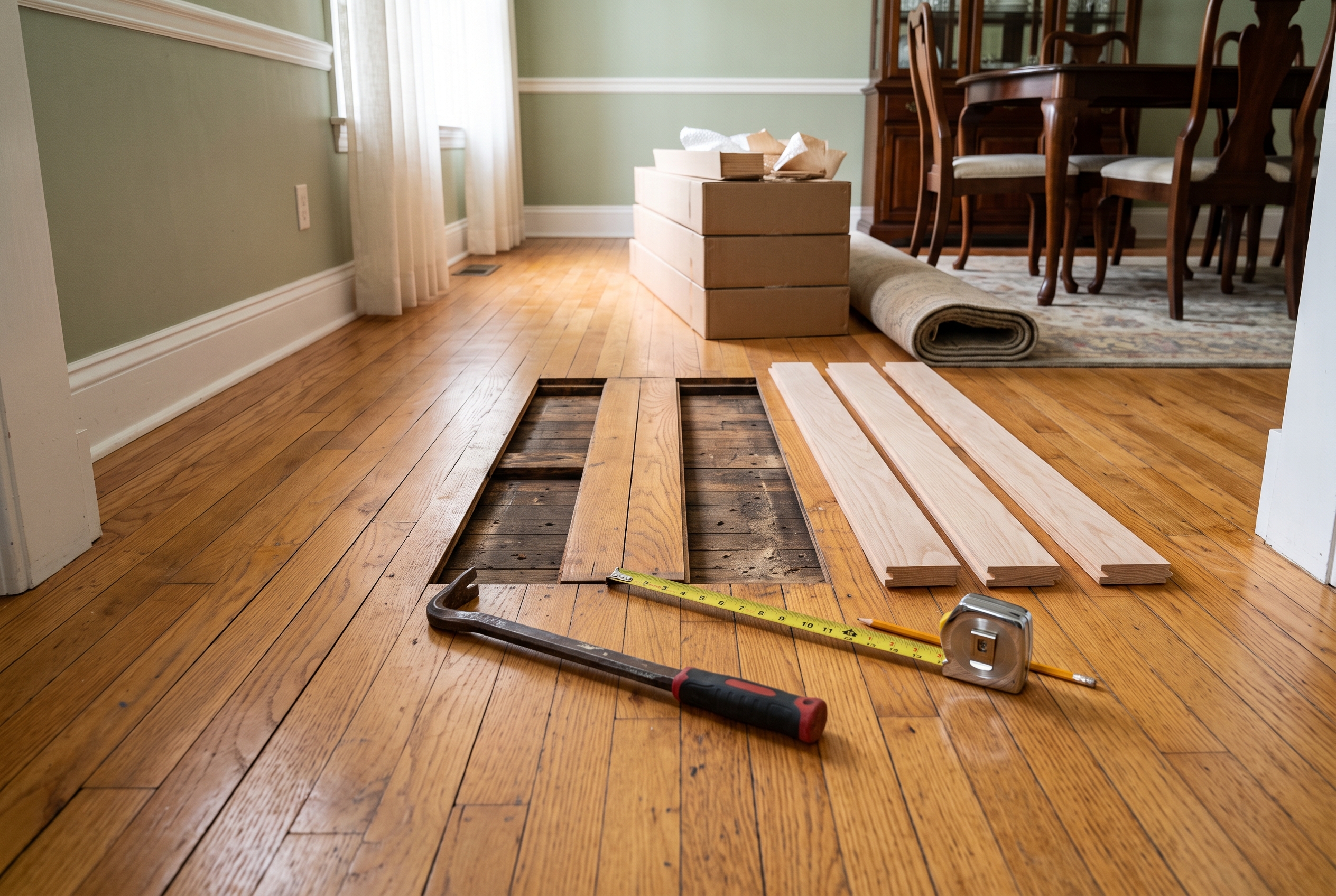
The way to keep a new floor affordable is to save on what changes how it looks and spend on what decides how long it lasts. You can save a good deal by choosing the floor room by room, keeping the layout simple, using remnants in small rooms and keeping floors that are still sound. The places not to cut are the subfloor, the pad or underlayment, the durability rating in busy rooms, the installation and the amount of material.
Save on the floor itself by matching it to each room instead of buying one top-grade floor for the whole house. A guest bedroom doesn't need the same floor as a mudroom, and laminate or luxury vinyl gives you a wood look for less than hardwood.
Don't save on what's under the floor. A floor laid over an uneven or damp subfloor, or over the wrong pad, wears out early however good it is, and the repair costs more than the prep would have.
If the budget still won't stretch, spread the cost with financing or do the house a room at a time, rather than dropping to a floor that won't hold up where you need it most.
Every flooring quote is made of the same parts, and only some of them are safe to trim.
| Part of the quote | Safe to save? | Why |
|---|---|---|
| The flooring itself | Yes, room by room | Match the grade to the room's traffic |
| Pattern and layout | Yes | Straight layouts cut less and waste less |
| Removing the old floor | Sometimes | Sound floors can stay; old vinyl needs care |
| Subfloor repair and flattening | No | Every floor depends on it |
| Moisture protection | No | Damp slabs ruin floors without it |
| Pad or underlayment | No | The wrong one shortens the floor's life |
| Installation | No | A floor is only as good as its install |
| Extra material | No | Spares are the only sure match later |
Where the Money in a New Floor Goes
A flooring project costs more than the flooring. Removing the old floor, repairing and flattening the subfloor, moisture protection and the pad or underlayment all sit on the same quote. So do trim, transitions and the installation itself, which is why two quotes for the same floor can be far apart.
Knowing the parts lets you ask the right question about each one. The flooring and the layout are choices you control. The prep, the pad and the installation keep the floor from failing, and they are where a low quote usually finds its savings. We price the whole job, prep included, at a free in-home estimate, so you see every part before you decide.
Where to Save on New Flooring
The savings on new flooring that don't come back to bite you all change what you walk on or how it looks, never what holds it up. These are the ones we'd point you to first.
Match the Floor to Each Room
The biggest saving in most homes comes from not buying one floor for every room. Spend on the rooms that take water, dirt and traffic, and choose a lighter-duty floor where the demands are lighter.
Bedrooms and guest rooms are the easiest places to save. Carpet is comfortable and usually costs less than hard flooring, and a bedroom can take a softer, lighter-duty carpet than a family room. Kitchens, entries, laundry rooms and bathrooms are where the durability and water resistance you pay for earn their keep. A formal living room that sees company twice a year can take a floor you would never put in a mudroom.
Get the Look of Hardwood for Less
If you love the look of wood but not the price, laminate and luxury vinyl both reproduce it convincingly for less than solid hardwood. Laminate has a hard, scratch-resistant surface and suits almost any room except wet ones, unless its maker rates it waterproof. Luxury vinyl is waterproof, which makes it the natural pick for kitchens, baths and basements.
Hardwood still offers something the look-alikes don't: it is real wood, and it can be sanded and refinished instead of replaced. In a living room you plan to enjoy for twenty years, that can make it the better value, and a wood look in the other rooms keeps the total down. You can compare our laminate floors and our luxury vinyl side by side online.
Carpet Remnants for Small Rooms and Rugs
A remnant is the end of a carpet roll left over from a larger job, and it usually sells for less than the same carpet cut from a full roll. For a small bedroom, a closet, a home office or a stair landing, a remnant can be a real saving. A remnant can also be bound along its edges into an area rug, an affordable way to get a rug in the size you need.
Carpet remnants and area rug binding are both part of our flooring services, so bring your room measurements when you visit.
Keep Layouts and Transitions Simple
A straight layout costs less than a patterned one, because herringbone, chevron and diagonal layouts mean more cuts, more waste and more labor. Running one floor through connected rooms saves money too. Every change of floor needs a transition strip and extra trim at the doorway, and fewer floor types usually look better as well.
Keep the Floor You Have When It's Sound
Not every old floor has to come out. Hardwood hiding under old carpet can often be sanded and refinished for far less than new flooring, and our guide to refinishing versus replacing hardwood explains how to tell. New tile can go over old tile when the old tile is well bonded and the extra height works at doors and appliances.
The one old floor never to pull up yourself to save money is old vinyl in an older house, since the tiles, their backing or the glue under them may contain asbestos.
Where Not to Cut Corners on a New Floor
The corners not to cut on a new floor are the ones you can't see once it's down. Each costs little next to the repair it prevents, and each is where a low quote most often finds its savings.
A Flat, Dry Subfloor
Every floor expects a subfloor that is clean, flat, dry and solid. COREtec's installation instructions, for one, require that, with moisture tested and any problem treated before the floor goes down. A floating floor over dips and humps flexes at the seams, and its locking edges can break or pull apart.
Basements and slab floors here can also carry moisture up from the ground, especially through humid summers. A moisture test and the right barrier cost little next to a cupped wood floor or a ruined laminate. Our post on whether luxury vinyl is really waterproof explains why even a waterproof floor needs a dry subfloor under it.
Tile is the least forgiving of all. The Ceramic Tile Education Foundation warns homeowners to be wary of any contractor who calls underlayment unnecessary, because the lowest price for a tile job can end up the most expensive. Subfloor repair is part of what we do before any floor goes in.
Carpet Cushion and Underlayment
The pad under carpet and the underlayment under laminate are inexpensive parts that decide how the floor wears. A thicker pad is not a better pad. The Carpet and Rug Institute's rule of thumb for most home carpet is cushion no more than 7/16 inch thick at 6 pounds per cubic foot. Under berber, it is no more than 3/8 inch at 8 pounds. The wrong cushion can cause wrinkles, buckling and split seams, and it can void the carpet maker's warranty.
Bedrooms can take a softer pad, while hallways, stairs and family rooms need a thinner, firmer one. Our carpet cushion guide goes deeper. Under laminate, the underlayment supports the locking joints, blocks moisture and evens out small imperfections, so it isn't the place to save either.
Durability Where the Traffic Is
A floor rated for light use wears through in a busy hallway, and replacing it costs more than buying the right grade the first time. Spend on durability in the rooms that take the traffic, and save on it in the rooms that don't.
For luxury vinyl, durability comes down to the wear layer, the clear top coat measured in mils, and thicker is tougher. Shaw Floors ties how long its vinyl lasts to the wear layer, the traffic and the care it gets. For laminate, look for a product certified for the level of use you need. For carpet in busy rooms, tightly twisted yarn holds its shape longer, while a plush pile is best kept for quiet, formal rooms.
A Careful Installation
A good floor installed badly is a bad floor. The difference between installations shows up in the prep, the gaps left for movement, the seams and the transitions, and a low installation price usually comes from skipping some of them. Our licensed installers, with job supervision and coordination on every install, are part of what you pay for with us.
Enough Material for Waste and Repairs
Ordering the exact square footage saves a little today and can cost a lot later. Every install needs extra for cuts and waste. A few spare planks or tiles, or a spare piece of carpet, are also the only reliable way to repair a damaged spot years from now, since colors shift between production runs. For tile, we recommend keeping about 10 percent extra.
If you own rental units, putting one floor in all of them stretches that spare material further, because one box of extras can repair any unit.
Old Vinyl Floors in Older Homes
If your house was built before the 1980s, don't rip up old vinyl tiles or sheet vinyl yourself to save on removal. The EPA lists vinyl floor tiles, the backing on vinyl sheet flooring and the adhesives under them among the materials that may contain asbestos. Left in place and in good shape, it is harmless. Pulling, scraping or sanding it can release fibers, so if the removal will disturb it, it is a job for a trained, accredited asbestos professional, and taking samples yourself isn't recommended.
How Financing Fits a Flooring Budget
Financing lets you buy the right floor now instead of the wrong one. If the budget falls short of what a busy kitchen or a basement really needs, spreading the cost over monthly payments usually beats dropping to a floor that won't hold up. Our flooring financing covers the whole project, and the page has the current terms.
Doing the house in phases is the other route. Floor the rooms that need it most first and the rest when the budget allows, keeping spare material from the first phase so the next one matches.
Staying on Budget With Rodrigues Flooring
At Rodrigues Flooring, we help you put your flooring budget where it does the most good. We carry one of the largest selections in the area, across carpet, hardwood, laminate, luxury vinyl, tile and more, so there is a floor at every price point to compare in our Moorestown showroom.
Our free in-home estimates let us see the rooms and the subfloor and price the whole job before you commit. Our design consultation helps you decide where to spend and where to save, room by room. We are a family business run by three brothers, with more than 20 years in flooring.
Affordable Flooring Questions We Hear Most
What Is the Cheapest Flooring to Install?
Carpet and sheet vinyl are usually the least expensive floors to buy and install, with laminate and luxury vinyl close behind. Hardwood, tile and natural stone generally cost more, tile and stone largely because of the prep and labor they need. The cheapest floor for a given room, though, is the one that won't need replacing early.
Is Laminate or Luxury Vinyl Cheaper?
Neither is always cheaper; both come in a wide range of prices, and a good laminate can cost about the same as a good luxury vinyl. The deciding difference is water: luxury vinyl is waterproof, while laminate belongs in dry rooms unless its maker rates it waterproof. Choose the type by room, then compare prices within it.
Is It Cheaper to Install Flooring Yourself?
Yes, you save the installation labor, but you take on the prep, which is where floors fail. A floating floor over an uneven subfloor, a carpet stretched badly or tile over a flexing floor can cost more to fix than the labor you saved. Flooring makers also expect their installation instructions to be followed, and a floor put in some other way may not be covered.
What Is the Rule of 3 in Flooring?
The rule of 3 is a design guideline that limits a home to about three flooring types or tones so the rooms flow together. It happens to save money as well, since fewer floor types mean fewer transitions and less trim at the doorways.
Get a Price for the Floor That Fits
The most affordable floor is the right floor for each room, installed over a subfloor that's ready for it. Book a free in-home estimate, tell us your budget, and we'll show you where it goes furthest.


