

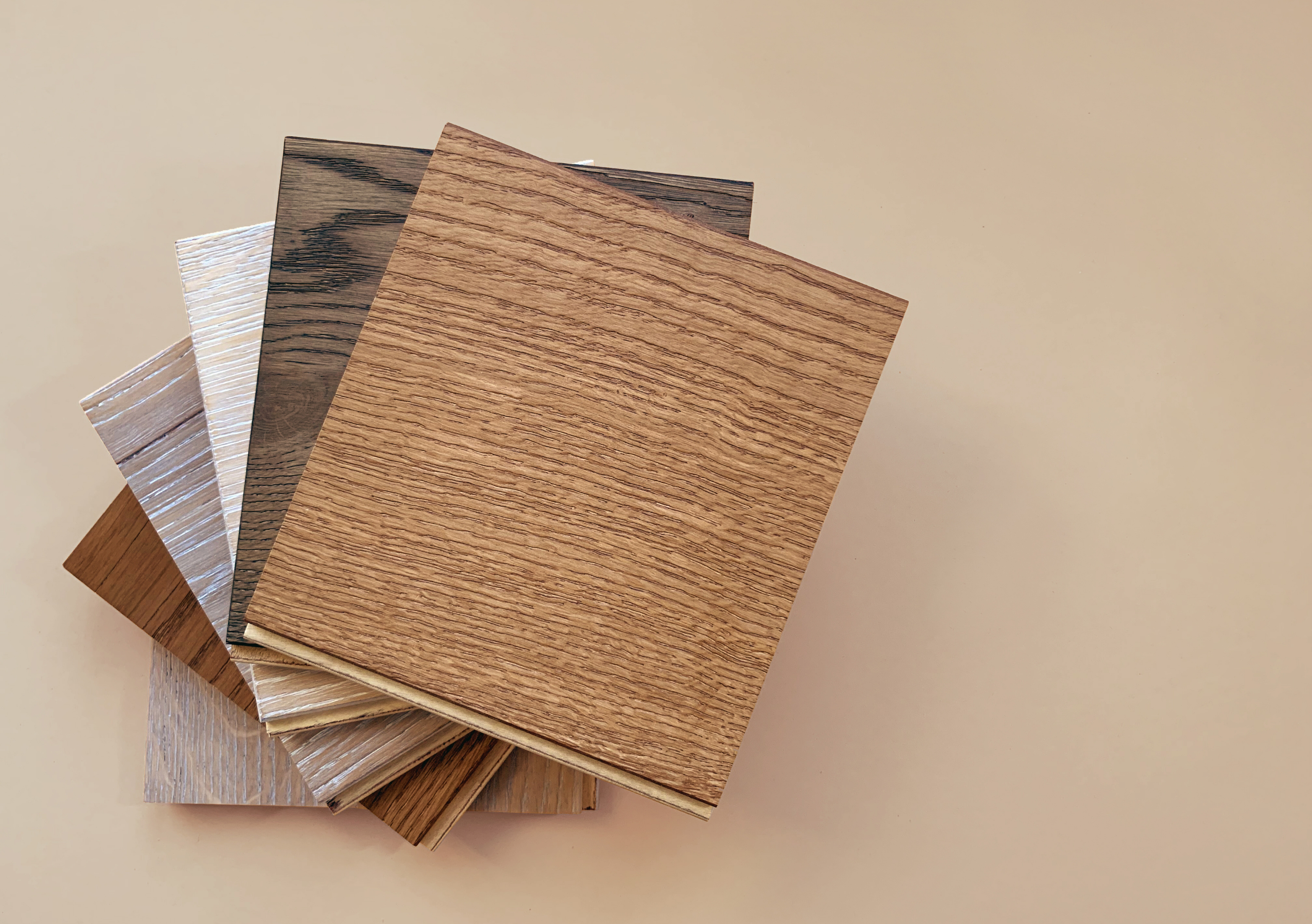
Hickory resists dents best, maple gives the cleanest look but shows wear the most, and oak hides everyday life and takes stain the most evenly. The right one for your house depends less on which wood is hardest than on what you need the floor to hide.
Oak is the safe choice for most rooms, which is why red oak is the most widely used flooring wood in the country. Its visible grain hides scuffs, it takes a wide range of stain colors, and red oak moves the least of the three woods when the seasons change. White oak is a little harder and cooler in color, handles moisture slightly better, and usually costs a bit more.
Hickory is the pick when dents are the worry. It is at least 40 percent harder than red oak, and its mix of cream and brown boards hides scratches and dirt. In exchange you get a busy look that not everyone wants, the highest price of the three, and the most seasonal movement, which shows up as wider gaps in a heated winter.
Maple is the pick for a pale, calm, even floor. Hard maple is harder than either oak and is the traditional wood of gym floors. Its tight grain tends to blotch when stained, its smooth pale surface shows scratches more than oak does, and its color can shift in strong sun. Buy it prefinished, in a low sheen, and confirm that it is hard maple.
| What you care about | Oak | Hickory | Maple |
|---|---|---|---|
| Janka hardness (lbf) | 1,290 red, 1,360 white | About 1,800 to 2,100 | 1,450 (hard maple) |
| Look | Visible grain, classic | Strong cream and brown contrast | Smooth, even, pale |
| Hiding scratches | Good | Best | Weakest |
| Taking stain | Even, wide color range | Good, contrast stays | Blotchy unless prefinished |
| Seasonal movement | Red oak least, white oak more | Most | More than red oak |
| Relative cost | Red oak lowest | Highest | Can run above oak |
The page is built in three parts, so you know how far to scroll. It opens with the three matchups people search for: maple vs hickory, hickory vs oak and maple vs oak. Next come hardness and each wood on its own, then the deciding factors: scratches, humidity and radiant heat, stain and color, cost, and grade and width. It ends with the best species for each room, how to compare samples, where to see them near Moorestown, and common questions.
Maple vs hickory hardwood floors
Choose hickory if the floor has to survive a big dog or busy kids, and maple if you want a calm, pale floor in a room with lighter traffic. Hickory is roughly 25 percent harder than hard maple, and its mix of light and dark boards hides the scratches that maple's even surface shows. Maple gives the cleaner, more modern look.
Both woods move more with the seasons than red oak, so both open wider gaps in a dry winter, and true hickory moves about 16 percent more than hard maple. The National Wood Flooring Association (NWFA) calls both less suited to radiant heat unless the flooring maker approves the product, and many engineered hickory and maple floors carry that approval. Engineered construction, a real wood top layer on a cross-built core, steadies either one.
Stain and price split them too. Hickory takes stain well, though the contrast between its boards stays. Maple is the hardest of the three to stain evenly, so it is best bought prefinished. Hickory usually costs more.
A family room, mudroom or farmhouse kitchen suits hickory. A modern or Scandinavian room, where the floor should fade into the background, suits maple.
Hickory vs oak flooring
Hickory is the harder, busier floor, and oak is the easier one to live with. Hickory resists dents better, since it is at least 40 percent harder than red oak and about a third harder than white oak. Oak costs less, takes stain more evenly, moves less with the seasons, and suits more styles of house, from an older colonial to a new open plan.
Most people decide on looks. Hartco, which makes both, describes hickory as swinging from light cream to deep brown within a single board. Oak is more uniform: red oak is warm and reddish-brown, and white oak is cooler, with beige and gray tones. A hickory floor becomes a feature of the room, while an oak floor sits quietly behind the furniture.
Hickory also asks more of the installer, because it is hard to cut and sand. And if the new floor has to meet an existing one, check the old floor first. Oak is the most widely used flooring wood, so an older floor is likely to be oak, and new oak will blend with it where hickory will not.
Pick hickory where dents are the main worry and you like a rustic look. For nearly everything else, pick oak. Choose white oak over red if you want a cooler color or a little extra moisture resistance near a kitchen or back door.
Maple vs oak flooring
Maple is slightly harder, and oak is more forgiving. Hard maple is about 12 percent harder than red oak and 7 percent harder than white oak, so it dents a little less. Oak hides everyday wear better, takes stain evenly where maple blotches, and usually costs less. Red oak also moves less with humidity than maple does.
White oak is the exception on movement. In plainsawn boards, the standard cut with the growth rings running along the face, white oak moves a little more than maple. Riftsawn and quartersawn white oak, cut so the rings stand more upright in the board, move much less.
Day to day, you will notice how each floor shows use. Maple's pale, closed grain makes scratches and grit marks easier to see, and its color can shift in strong sun. Oak's open grain, with pores you can see, breaks up small marks, and red oak's color holds steady.
Maple is right when a clean, even, pale floor is the point of the room, bought prefinished with a matte sheen. Oak is right when you want a floor that forgives, takes the stain you picked, and matches the rest of the house.
How hard are oak, hickory and maple?
Hickory is the hardest of the three, hard maple is next and oak is the softest, though all three are hard enough for any room in a house. The standard measure is Janka side hardness, the force needed to press a steel ball 0.444 inch across halfway into the wood. The U.S. Forest Products Laboratory's Wood Handbook, the government's reference on wood properties, publishes the results for dry wood.
By the handbook's figures, red oak tests at 1,290 pounds of force (lbf), white oak at 1,360 and hard maple at 1,450. Pecan tests at 1,820, and the true hickories range from 1,810 to 2,140. With red oak as the yardstick, white oak is about 5 percent harder, hard maple about 12 percent harder and hickory at least 40 percent harder.
What the Janka number does not measure
The Janka number predicts dents, not scratches, and it only applies to solid wood. The NWFA says the scale shows how well a species holds up to dents and dings, and that none of its values apply to engineered wood flooring. For an engineered floor, judge dent resistance by the species of its top layer, and ask the maker for any test results it publishes.
Scratches are a separate problem. A dog's nail or a piece of grit cuts the finish first, so sheen, color and grain decide how much a scratch shows. The NWFA adds that the way the wood is cut and the finish on it also affect how durable a floor is. The handbook's numbers are also averages from clear, knot-free test pieces, and real boards vary.
Harder is not always better, either. Bruce points out that very hard woods can be tougher to install and sometimes more brittle.
What the hickory or maple label can mean
A sample labeled hickory or maple can hold more than one wood. Flooring mills have long mixed pecan in with hickory, and the Hardwood Manufacturers Association says the two are virtually the same wood and usually sold together. Maple is the bigger catch. Only sugar and black maple are hard maples, and Mirage, a maple flooring maker, warns that some makers sell soft maple as maple without saying so.
Each name can cover several woods, and their hardness in the Wood Handbook differs more than most shoppers expect.
| Name on the box | Wood it may be | Side hardness (lbf) |
|---|---|---|
| Hickory | Shagbark, mockernut, pignut or shellbark | 1,810 to 2,140 |
| Hickory, or hickory and pecan | Pecan, often mixed in | 1,820 |
| Maple or hard maple | Sugar maple | 1,450 |
| Maple or hard maple | Black maple | 1,180 |
| Maple | Red maple, a soft maple | 950 |
| Red oak | Northern red oak and relatives | 1,290 (northern red) |
| White oak | White oak and relatives | 1,360 (white oak) |
A soft maple at 950 is softer than red oak, so ask whether a maple sample is hard maple before you compare it with anything else.
Why oak is the most popular flooring wood
Oak is the most popular flooring wood because it does almost everything well and costs less than the alternatives. The Hardwood Manufacturers Association calls red oak the most widely used species. Red oaks also grow more abundantly than white oaks, which keeps oak easy to find and reasonably priced. It hides wear, takes stain in a wide range of colors, and suits traditional and modern rooms alike.
Oak has an open grain, meaning its pores are big enough to see, and how that grain looks depends on how the log was sawn. Plainsawn oak shows a plumed, flame-like pattern. Riftsawn oak shows a tight, straight grain, and quartersawn oak shows flecks sometimes called tiger rays. You can browse the oak hardwood we carry by color, width and construction.
Red oak or white oak?
Red oak is warmer, cheaper and steadier through the seasons, and white oak is cooler, slightly harder and a little better with water. Red oak has a reddish tone, while white oak is light brown, sometimes with a pink or slightly gray cast. White oak's rays, the ribbons of cells that show as flecks on quartersawn boards, are longer, so it shows more figure.
Hartco, which sells both, says white oak is slightly more moisture-resistant, and its traditional use for tight barrels points the same way. Red oak takes stain more readily, especially light colors. It is also the more affordable of the two, because it is more plentiful.
White oak has one drawback people rarely hear about. By the Forest Products Laboratory's figures, plainsawn white oak changes width about 24 percent more than red oak for the same change in humidity. Riftsawn and quartersawn white oak move far less, which is part of why those cuts are popular.
To match an existing oak floor, work out which oak it is first. Look at the color and the flecks: red oak runs reddish, white oak runs light brown or grayish, and white oak's longer rays leave longer flecks on riftsawn and quartersawn boards.
Then match the finish. The NWFA says oil-based finishes are amber and water-based finishes are normally clear. New boards under a clear finish can look paler than an old oil-finished floor beside them, even when the species is the same.
Oak's drawbacks
Oak's drawbacks are mostly about looks. Very deep stains can look uneven on oak's open grain, because the grain's different textures take up stain differently, as the Hardwood Manufacturers Association notes. Red oak's reddish tone shows through clear and light finishes, which some people love and others do not. And plainsawn oak's flame-like grain can look busy or traditional in a very modern room.
Is hickory good for flooring?
Yes, hickory is one of the best flooring woods for a busy house, as long as you like its look. It is the hardest of the common domestic flooring species. The Hardwood Manufacturers Association describes the hickories as the heaviest American hardwoods, with very good strength and shock resistance. Hickory suits hallways, entries, kitchens and family rooms, the places floors take the most punishment.
Hickory's look comes from its mix of colors. The NWFA describes tan to reddish heartwood, white to cream sapwood, and a sharp color difference between each year's spring and summer growth, and knots add to the mix. Wide planks calm some of that busyness, and hand-scraping pushes it toward a rustic look. Hickory takes stain well, so you can still choose the overall color.
The hickory hardwood we carry comes in solid and engineered construction, in smooth, hand-scraped and wire-brushed textures.
The downsides of hickory flooring
The downsides of hickory flooring come from the same traits that make it tough. The look is busy and can overwhelm a small or formal room. It usually costs the most of the three woods. And it is hard to cut and sand, so installing it is a job for a professional.
Hickory also moves the most with the seasons. The Hardwood Manufacturers Association notes its high shrinkage. In a house with humid summers and dry, heated winters, that means wider seasonal gaps than oak.
Is maple a good choice for flooring?
Yes, hard maple makes an excellent floor when you want a pale, clean, uniform look and can keep grit in check. Its grain is closed and subdued, and its color runs from creamy white to light reddish brown. The Hardwood Manufacturers Association says hard maple has high resistance to abrasion and wear, which is why it is the traditional wood for gymnasium and ballroom floors.
Maple suits rooms where the floor should fade into the background: modern kitchens, Scandinavian or minimalist living rooms, and bedrooms. Now and then a board shows curly or bird's-eye figure, and those boards often sell at a premium. The maple hardwood we carry comes in solid and engineered construction.
Disadvantages of maple wood flooring
The disadvantages of maple flooring are staining, visible marks, color change, seasonal movement and the soft-maple question. Its tight grain tends to blotch when stained, so buy it prefinished. Its pale, even surface shows scratches more than oak does, though Mirage says a matte finish helps hide them. And its color can shift in strong sunlight.
Hard maple also moves with the seasons. The Hardwood Manufacturers Association notes its high shrinkage, and the NWFA lists maple among the species less suited to radiant heat. Since soft maple is sold as maple, ask for hard maple by name.
Which species hides scratches and dog nails best?
You have a big dog or young kids, and you want the floor to look good in five years. Hickory is the best of the three for that house, because it resists dents best and its mixed colors hide scratches. Oak is a close second, since its open grain breaks up small marks. Maple resists dents better than oak but shows scratches the most.
Mirage, which makes floors in all three woods, finds that everyday wear hardly shows on oak's open grain and reddish color, while marks stand out on maple's closed, even, pale grain. The finish matters as much as the species, though. The less sheen a floor has, the less small scratches show, according to the NWFA, so choose matte or satin over gloss.
Texture and color help too. Hand-scraped, distressed or wire-brushed hardwood blends scratches into the surface. Bruce notes that scratches are usually light, so they fade into light floors and stand out on dark ones.
If you want more hardness than any natural species offers, look at densified wood. Hartco, which makes it, says its Dogwood Pro process uses heat and pressure to more than double the wood's hardness, taking oak from 1,360 to about 3,000 on the Janka scale. It is an engineered oak floor, and we carry it in red and white oak. For rugs, cleaning and the rest of the family-proofing picture, see our guide to kid- and pet-friendly hardwood floors.
Which species moves most with humidity?
Red oak moves the least of the three and true hickory the most. Every wood floor shrinks a little in a dry, heated winter and swells in a humid summer. The Forest Products Laboratory publishes coefficients for how much each species moves in the normal indoor range. By those figures, a plainsawn floor of hard maple changes width about 16 percent more than red oak, white oak about 24 percent more and true hickory about 35 percent more.
The NWFA recommends holding a house between 30 and 50 percent relative humidity, at 60 to 80 degrees F, all year. At 70 F, the Wood Handbook shows wood settling at about 6.2 percent moisture in 30 percent humidity and 9.2 percent in 50 percent. Holding that band takes a humidifier in winter and air conditioning or a dehumidifier in summer, and our guide to protecting hardwood from South Jersey humidity swings covers how.
Even inside that band, the movement adds up across a 12-foot-wide room if the boards follow the air all the way.
| Species and cut | Compared with plainsawn red oak | Across a 12-foot floor |
|---|---|---|
| Plainsawn red oak | Baseline | About 1 5/16 inches |
| Plainsawn hard maple | About 16 percent more | About 1 1/2 inches |
| Plainsawn white oak | About 24 percent more | About 1 5/8 inches |
| Plainsawn true hickory | About 35 percent more | About 1 3/4 inches |
| Quartersawn white oak | About 36 percent less | About 13/16 inch |
| Quartersawn red oak | About 55 percent less | About 5/8 inch |
That movement is spread across every seam, so it shows up as thin gaps in January that close by August. The NWFA considers gaps that come and go with the seasons normal. They widen if the air drops well under the band: at 20 percent humidity, wood dries to about 4.5 percent moisture. Pecan, often mixed into hickory, moves only about as much as red oak.
Three choices cut movement in any species. Riftsawn and quartersawn boards are more stable in width, which the NWFA confirms. Narrow boards move less than wide ones. And engineered floors expand and contract less than solid wood, which is why our comparison of engineered and solid hardwood leans engineered for basements and slabs.
Hardwood over radiant heat
Over radiant heat, red oak or a riftsawn or quartersawn white oak is the safer choice, and any floor should carry its maker's approval. The NWFA's installation guidelines call hickory, beech and maple less-stable species that are less suitable over radiant heat. They say engineered floors with a hickory or maple top layer are not normally the best fit either, unless the flooring maker says otherwise.
Many makers do approve specific engineered products, and plenty of the hickory and maple in our catalog is marked approved for radiant heat. You can filter our engineered hardwood for that approval. The NWFA also favors riftsawn or quartersawn boards and narrow widths over radiant heat. It calls for humidity control that keeps the room between 30 and 50 percent.
How oak, hickory and maple take stain
Oak takes stain the most predictably, hickory takes it well but keeps its contrast, and maple is the hardest to stain evenly. The Hardwood Manufacturers Association says red oak stains to a golden finish with a wide range of tones, and white oak stains well too. Red oak takes light stains more readily than white oak. On either oak, only very deep colors tend to look uneven.
Maple is the difficult one. Tight-grained woods such as maple often go blotchy when stained on site, according to the Hardwood Manufacturers Association. Finishers can seal maple with a thin wash coat before staining to even it out, though that limits how dark the color can go. The simpler answer is a prefinished maple floor, colored at the factory, which is what Bruce recommends.
Hickory accepts stain and finish well, but the difference between its light and dark boards stays, so a stained hickory floor still reads as hickory. If you want a darker, calmer floor, a stained oak gets there more easily. For how a light or dark floor changes the feel of a room, see our guide to light vs dark floors.
How each wood changes color in sunlight
Maple changes color in sunlight the most of the three, and red oak the least. Mirage, which makes floors in both woods, says red oak's color changes very little over time, even under intense light. Maple, by contrast, can show pronounced color variation, which the UV protection in a factory finish helps limit.
The finish shifts color too. The NWFA says water-based finishes are normally clear and oil-based finishes are amber. If you want maple or white oak to stay pale, ask for a clear water-based or factory finish rather than an oil-based one.
Which costs more, hickory, maple or oak?
Hickory usually costs the most, red oak the least, and white oak and maple fall in between. Bruce, which sells all three, says hickory costs more than oak and maple because there are fewer hickory trees. It also says red oak costs less than white oak, and that solid maple can cost more than oak. Red oak's place as the most abundant species is why it is the budget choice.
Species is only one line in the price. Within any species, wider planks and cleaner grades cost more, while narrower boards and character grades cost less, and the finish and construction move the price too. Installation is a separate line. Published price ranges for these woods rarely say where their numbers come from, so this guide gives the order rather than dollar figures.
A real number comes from measuring your rooms with the floor you picked, which is what a free in-home estimate gives you. If the total runs higher than planned, our financing options can spread the cost.
Grade, sawing and plank width
Two floors of the same species can look nothing alike, because grade, sawing and width change the look as much as the wood does. A grade groups boards by their surface features, such as knots, color variation and length. The NWFA says all grades are equally strong and serviceable but each looks different, and many makers use their own grade names, so compare boards, not labels.
The same species looks formal in a clean grade and rustic in a character grade with more knots and color. Sawing matters most for oak, where plainsawn, riftsawn and quartersawn boards look distinctly different.
Width changes both look and movement. The NWFA calls boards under 3 inches wide strip flooring and anything wider plank, and notes that wider boards expand and contract more. For widths from 5 to 9 inches, see our look at wide plank hardwood.
The best species for each room
Oak suits almost any room, hickory belongs where traffic is hardest, and maple fits rooms where the floor should stay pale and quiet. Kitchens and basements add their own rules. Water and moisture matter more than species there, so engineered construction usually comes first.
| Room or situation | Species that suits it | Why |
|---|---|---|
| Family room with kids or a big dog | Hickory, or textured oak | Resists dents, hides scratches |
| Kitchen | White oak or hickory, engineered | Harder; engineered moves less |
| Formal living or dining room | Red or white oak | Classic grain, even stain |
| Bedrooms | Any, including maple | Low traffic suits maple |
| Modern open plan | Maple or white oak | Pale, calm, even |
| Over radiant heat | Red oak or quartersawn white oak | NWFA: hickory, maple less suited |
| Next to an existing oak floor | Oak | Matches grain and color |
| Basement on concrete | Any species, engineered | NWFA: no solid below grade |
A kitchen floor depends as much on wiping spills fast as on species, and our kitchen floor comparison weighs hardwood against luxury vinyl and tile. In older homes the floor you are matching is often oak, and our guide to hardwood in South Jersey colonials covers what holds up in those houses.
How to compare samples before you buy
A single sample under showroom lights tells you less than you think, so judge the wood the way you will live with it. See samples in your own rooms, look at a spread of boards, and ask the questions that separate one maple or hickory floor from another. These steps settle most decisions.
- Lay samples on your floor and look at them in morning and evening light.
- Look at several boards or an open carton, since one sample hides the range of color and grade.
- Ask which wood it is: hard or soft maple, hickory or hickory with pecan, red or white oak.
- Ask whether it is solid or engineered, and for engineered, how thick the top wood layer is.
- Choose a lower sheen and a textured surface if you have pets or kids.
- If the room has radiant heat, ask for the maker's written approval.
- Plan how you will keep the house between 30 and 50 percent humidity.
Where to see oak, hickory and maple near Moorestown
Rodrigues Flooring is a family-owned flooring company in Moorestown, NJ, run by three brothers with over 20 years in flooring and home improvement. We carry oak, hickory and maple hardwood in solid and engineered construction from makers including Shaw Floors, Mullican Flooring, Appalachian Flooring, Provenza Floors, Mirage and Hartco. We install it in homes across Burlington and Camden counties.
Our hardwood catalog lets you filter by species, construction, surface texture and radiant-heat approval before you visit. Our flooring services include design consultation, subfloor repair, and job supervision and coordination on installations. The showroom is at 88 Hartford Road in Moorestown.
More questions about oak, hickory and maple
What is the hardest wood flooring you can buy?
Among common domestic species, hickory is the hardest, with the true hickories testing from 1,810 to 2,140 pounds of force in the Wood Handbook. Some tropical species go higher, such as Brazilian cherry at about 2,350, according to Bruce. Densified wood goes further still: Hartco says its heat-and-pressure process takes oak to about 3,000.
What is the most popular hardwood flooring species?
Oak is the most popular hardwood flooring species in the United States. The Hardwood Manufacturers Association calls red oak the most widely used species, and Hartco says oak is generally the most popular choice among American homeowners. Plentiful supply, even staining and a grain that hides wear keep it there.
What about walnut, ash, pecan and other species?
Walnut and cherry are softer than oak, hickory or maple, at 1,010 and 950 in the Wood Handbook, so they suit lower-traffic rooms. White ash, at 1,320, is about as hard as oak and has a similar open grain. Pecan, at 1,820, is usually sold with or as hickory. Our catalog also includes walnut, pecan and acacia for anyone who wants something different.
Do oak, hickory and maple need different care?
No, care depends on the finish, not the species. The NWFA's advice applies to all three: mats at the doors, frequent sweeping or dust-mopping, spills wiped up right away, felt pads under furniture legs, and no sports cleats or high heels. Use the cleaner your floor's maker recommends, since the finish is what you are cleaning.
Can you refinish hickory and maple floors?
Yes, solid hickory and maple can be sanded and refinished, and so can engineered floors with a thick enough top layer. The NWFA says solid wood can be refinished many times and engineered wood fewer times. Hickory's hardness makes it slower to sand. For deciding whether an old floor is worth refinishing at all, see refinishing vs replacing hardwood in older homes.
Whichever species you are leaning toward, the fastest way to decide is to see it in your own rooms. We can bring samples of oak, hickory and maple to your home, measure, and talk through what fits your light, your traffic and your humidity during a free in-home estimate.


